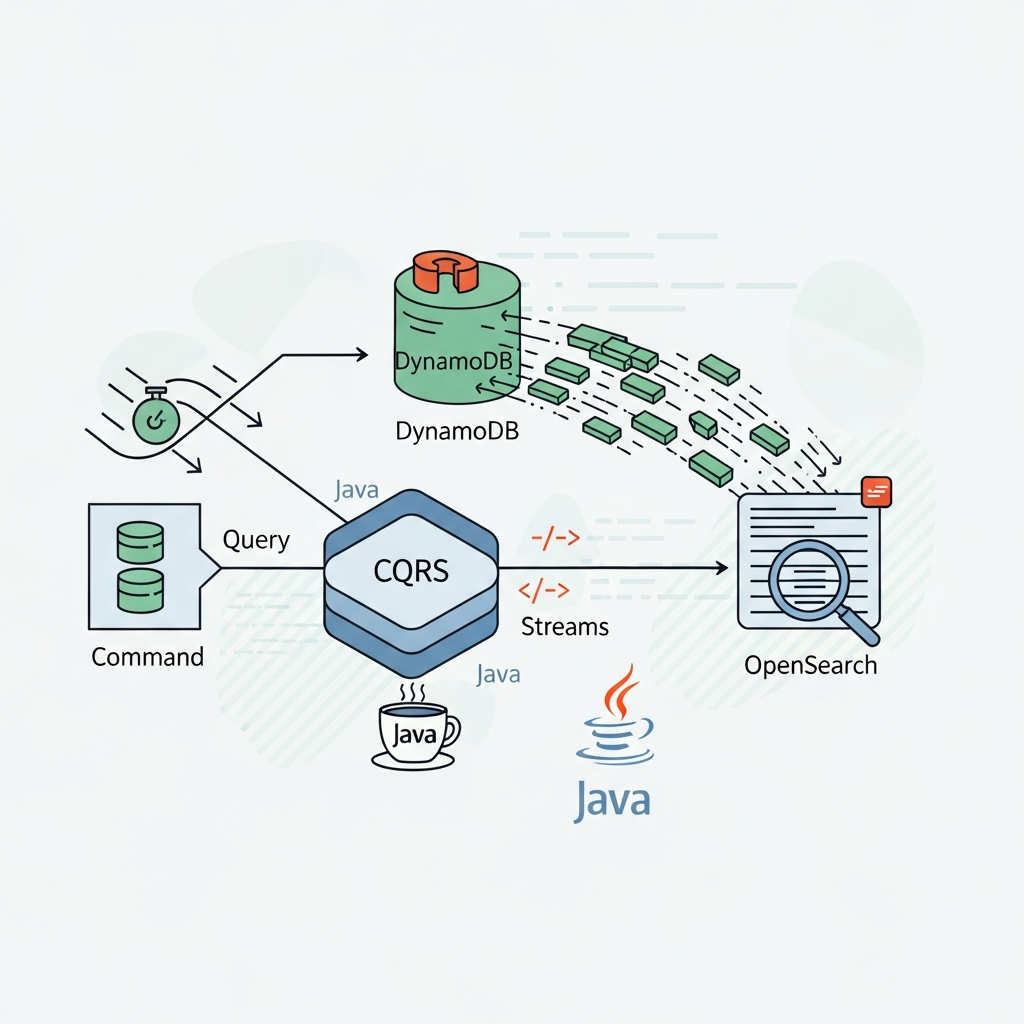
Mastering OpenSearch Query Performance in Java: Relevance & Filtering


Introduction
In today's data-driven world, the speed and accuracy of search are paramount. Users expect instant, highly relevant results, whether they're searching for products on an e-commerce site, documents in an enterprise system, or logs in a monitoring dashboard. OpenSearch, a powerful, open-source search and analytics suite, provides a robust foundation for building such capabilities. However, simply indexing data isn't enough; achieving optimal query performance – balancing lightning-fast responses with highly relevant results – requires careful fine-tuning.
This comprehensive guide is tailored for Java developers and search engineers looking to master OpenSearch query performance. We'll dive deep into the mechanics of relevance scoring and efficient filtering, exploring how to leverage OpenSearch's Query DSL (Domain Specific Language) through the OpenSearch Java Client. You'll learn to construct complex queries that not only return the right data but do so with exceptional speed, ensuring a superior user experience and scalable search architecture.
Prerequisites
To get the most out of this guide, you should have:
- Basic Java Development Skills: Familiarity with Java syntax, object-oriented programming, and common libraries.
- OpenSearch Fundamentals: An understanding of core OpenSearch concepts like indices, documents, mappings, and basic query types.
- OpenSearch Instance: Access to a running OpenSearch cluster (local, cloud, or Docker).
- Maven or Gradle: For managing project dependencies.
Understanding OpenSearch Query Fundamentals
Before we fine-tune, let's briefly revisit how OpenSearch processes queries. At its heart, OpenSearch (and its underlying Lucene library) uses an inverted index. When you index documents, OpenSearch breaks down text into terms, stores these terms, and maps them back to the documents containing them. This structure allows for incredibly fast lookups.
Queries in OpenSearch fall into two main categories: query context and filter context.
- Query Context: Used for full-text search. Queries executed in this context contribute to the document's
_score(relevance) and are not cached. Examples includematch_all,match,multi_match,query_string. - Filter Context: Used for structured search. Filters are binary (yes/no), do not contribute to the
_score, and are highly cacheable. This makes them significantly faster for filtering large result sets. Examples includeterm,terms,range,exists.
Understanding this distinction is fundamental to optimizing performance.
// Example: Basic Match Query (Query Context)
// This query will find documents where the 'title' field contains 'OpenSearch' or 'performance'
// and will score them based on relevance.

import org.opensearch.client.opensearch.OpenSearchClient;
import org.opensearch.client.opensearch._types.query_dsl.Query;
import org.opensearch.client.opensearch._types.query_dsl.MatchQuery;
import org.opensearch.client.opensearch.core.SearchRequest;
import org.opensearch.client.opensearch.core.SearchResponse;
import org.opensearch.client.json.jackson.JacksonJsonpMapper;
import org.opensearch.client.transport.OpenSearchTransport;
import org.opensearch.client.transport.restclient.RestClientTransport;
import org.apache.http.HttpHost;
import org.opensearch.client.RestClient;

import java.io.IOException;

public class BasicQueryExample {

    private OpenSearchClient client;

    public BasicQueryExample() {
        // Initialize the OpenSearch client
        RestClient restClient = RestClient.builder(new HttpHost("localhost", 9200, "http")).build();
        OpenSearchTransport transport = new RestClientTransport(restClient, new JacksonJsonpMapper());
        this.client = new OpenSearchClient(transport);
    }

    public void searchDocuments() throws IOException {
        String indexName = "my_documents";

        Query matchQuery = MatchQuery.of(m -> m
            .field("title")
            .query("OpenSearch performance")
        )._toQuery();

        SearchRequest searchRequest = SearchRequest.of(s -> s
            .index(indexName)
            .query(matchQuery)
        );

        SearchResponse<Void> response = client.search(searchRequest, Void.class);

        System.out.println("Total hits: " + response.hits().total().value());
        response.hits().hits().forEach(hit -> {
            System.out.println("Document ID: " + hit.id() + ", Score: " + hit.score());
        });
    }

    public static void main(String[] args) throws IOException {
        new BasicQueryExample().searchDocuments();
    }
}
The Core of Relevance: Scoring and Boosting
Relevance is determined by a scoring algorithm, primarily BM25 (a successor to TF/IDF). This algorithm considers:
- Term Frequency (TF): How often a term appears in a document.
- Inverse Document Frequency (IDF): How rare a term is across the entire index (rarer terms are more significant).
- Field Length Normalization: Shorter fields containing a term are often more relevant.
You can influence this scoring through boosting.
- Field Boosting: Assign higher importance to certain fields during indexing or querying using
^. For example,title^3means matches in thetitlefield are 3 times more important. - Query Boosting: Apply a boost to an entire query clause. This is useful when combining multiple search criteria.
// Example: Field Boosting in a Multi-Match Query
// Documents matching 'title' will be boosted more than those matching 'description'.

import org.opensearch.client.opensearch._types.query_dsl.MultiMatchQuery;
import org.opensearch.client.opensearch._types.query_dsl.Query;
import org.opensearch.client.opensearch._types.query_dsl.TextQueryType;

// ... (client initialization as before)

public void searchWithFieldBoost() throws IOException {
    String indexName = "product_catalog";

    Query boostedQuery = MultiMatchQuery.of(m -> m
        .fields("title^3", "description", "tags^2") // Title gets 3x boost, tags 2x
        .query("laptop pro")
        .type(TextQueryType.MostFields) // Searches across multiple fields, combining scores
    )._toQuery();

    SearchRequest searchRequest = SearchRequest.of(s -> s
        .index(indexName)
        .query(boostedQuery)
    );

    SearchResponse<Void> response = client.search(searchRequest, Void.class);
    // ... process response
    System.out.println("Total hits with field boost: " + response.hits().total().value());
}
Precision Filtering: filter vs. query Contexts
This is perhaps the most critical concept for query performance. As mentioned, filter context queries do not contribute to _score and are highly cached. This makes them ideal for narrowing down results based on exact values, ranges, or existence checks.
Always use filter for conditions that are binary (must match or not) and don't need to affect relevance. Use query only when the condition should influence the _score.
The bool query is your primary tool for combining query and filter clauses:
must: Clauses that must match. Contributes to_score.should: Clauses that should match. Contributes to_score. At least oneshouldclause must match if there are nomustclauses.filter: Clauses that must match. Do NOT contribute to_score. Are cached.must_not: Clauses that must not match. Do NOT contribute to_score. Are cached.
// Example: Combining Query and Filter Contexts with a Bool Query
// Search for 'OpenSearch' in title/description (relevance) AND filter by category 'database'
// and price range (performance).

import org.opensearch.client.opensearch._types.query_dsl.BoolQuery;
import org.opensearch.client.opensearch._types.query_dsl.TermQuery;
import org.opensearch.client.opensearch._types.query_dsl.RangeQuery;

// ... (client initialization)

public void searchWithBoolQuery() throws IOException {
    String indexName = "products";

    Query mainSearchQuery = MultiMatchQuery.of(m -> m
        .fields("title^2", "description")
        .query("monitor 4k")
    )._toQuery();

    Query categoryFilter = TermQuery.of(t -> t
        .field("category.keyword") // Use .keyword for exact match on analyzed fields
        .value("electronics")
    )._toQuery();

    Query priceRangeFilter = RangeQuery.of(r -> r
        .field("price")
        .gte(JsonData.of(200))
        .lte(JsonData.of(500))
    )._toQuery();

    Query boolQuery = BoolQuery.of(b -> b
        .must(mainSearchQuery) // This contributes to relevance
        .filter(categoryFilter) // This filters results efficiently, no score impact
        .filter(priceRangeFilter) // Another efficient filter
    )._toQuery();

    SearchRequest searchRequest = SearchRequest.of(s -> s
        .index(indexName)
        .query(boolQuery)
    );

    SearchResponse<Void> response = client.search(searchRequest, Void.class);
    System.out.println("Total hits with bool query: " + response.hits().total().value());
}
Optimizing bool Queries for Performance
Beyond just using filter clauses, the structure of your bool query matters.
- Order of Clauses: While OpenSearch's query optimizer handles much, placing more restrictive
filterclauses first conceptually can help prune the result set earlier, reducing the number of documents the more expensivequeryclauses need to process. minimum_should_match: When usingshouldclauses, this parameter controls how many of them must match for a document to be included. It's crucial for balancing precision and recall. It can be an integer (e.g.,2), a percentage (e.g.,"75%"), or a combination. This helps prevent irrelevant results when you have manyshouldclauses.
// Example: Using minimum_should_match

import org.opensearch.client.opensearch._types.query_dsl.MatchQuery;

// ... (client initialization)

public void searchWithMinShouldMatch() throws IOException {
    String indexName = "articles";

    Query shouldClause1 = MatchQuery.of(m -> m.field("title").query("search performance"))._toQuery();
    Query shouldClause2 = MatchQuery.of(m -> m.field("content").query("java optimization"))._toQuery();
    Query shouldClause3 = MatchQuery.of(m -> m.field("tags").query("opensearch"))._toQuery();

    Query boolQuery = BoolQuery.of(b -> b
        .should(shouldClause1)
        .should(shouldClause2)
        .should(shouldClause3)
        .minimumShouldMatch("2") // At least 2 of the 3 should clauses must match
    )._toQuery();

    SearchRequest searchRequest = SearchRequest.of(s -> s
        .index(indexName)
        .query(boolQuery)
    );

    SearchResponse<Void> response = client.search(searchRequest, Void.class);
    System.out.println("Total hits with min_should_match: " + response.hits().total().value());
}
Advanced Filtering Techniques
OpenSearch offers a rich set of filter queries for specific data types and use cases:
term/terms: For exact matches on non-analyzed fields (e.g.,category.keyword,user_id).termsallows matching against multiple values.range: For numeric or date ranges (e.g.,price: [100 TO 500],date: [now-1M TO now]).exists/missing: To find documents where a field exists or does not exist.prefix: Matches documents where a field starts with a specified prefix.wildcard/regexp: For pattern matching. Use with caution on large datasets as they can be very resource-intensive, especially with leading wildcards (*term). They prevent the use of the inverted index efficiently.nested: For querying objects within an array that need to be treated as independent documents (e.g., an array of product variants, each with its own color and size).has_child/has_parent: For querying based on relationships between documents in parent-child relationships.
// Example: Nested Query for filtering product variants
// Imagine a product has multiple variants, each with its own 'color' and 'size'.
// We want products that have at least one variant that is 'red' AND 'large'.

import org.opensearch.client.opensearch._types.query_dsl.NestedQuery;
import org.opensearch.client.opensearch._types.query_dsl.TermQuery;

// ... (client initialization)

public void searchWithNestedQuery() throws IOException {
    String indexName = "products_with_variants";

    Query nestedColorTerm = TermQuery.of(t -> t.field("variants.color.keyword").value("red"))._toQuery();
    Query nestedSizeTerm = TermQuery.of(t -> t.field("variants.size.keyword").value("large"))._toQuery();

    Query nestedBoolQuery = BoolQuery.of(b -> b
        .filter(nestedColorTerm)
        .filter(nestedSizeTerm)
    )._toQuery();

    Query nestedQuery = NestedQuery.of(n -> n
        .path("variants") // The path to the nested field
        .query(nestedBoolQuery)
        .scoreMode(org.opensearch.client.opensearch._types.query_dsl.NestedQuery.ScoreMode.None) // No score impact
    )._toQuery();

    SearchRequest searchRequest = SearchRequest.of(s -> s
        .index(indexName)
        .query(nestedQuery)
    );

    SearchResponse<Void> response = client.search(searchRequest, Void.class);
    System.out.println("Total hits with nested filter: " + response.hits().total().value());
}
Leveraging Aggregations for Filtering and Faceting
Aggregations are powerful for analytical queries, but they can also enhance search by providing facets (e.g., filter by brand, color) or applying post-query filtering.
filterAggregation: Applies a filter to documents before running sub-aggregations. This is useful for analyzing a subset of your data.termsAggregation: Used to get counts of unique values in a field, commonly used for building faceted navigation.
When combining search with aggregations, the main query determines the documents considered for aggregation. You can also apply a post_filter to the search results after aggregations have run, which can be useful for showing all aggregation results while still filtering the displayed documents.
// Example: Search with Faceted Navigation (Terms Aggregation)

import org.opensearch.client.opensearch._types.aggregations.Aggregation;
import org.opensearch.client.opensearch._types.aggregations.TermsAggregation;
import org.opensearch.client.opensearch._types.aggregations.StringTermsBucket;
import java.util.Map;

// ... (client initialization)

public void searchWithFacets() throws IOException {
    String indexName = "product_catalog";

    Query mainQuery = MatchQuery.of(m -> m.field("name").query("smartwatch"))._toQuery();

    SearchRequest searchRequest = SearchRequest.of(s -> s
        .index(indexName)
        .query(mainQuery)
        .aggregations(Map.of(
            "brands", Aggregation.of(a -> a
                .terms(TermsAggregation.of(t -> t.field("brand.keyword")))
            ),
            "colors", Aggregation.of(a -> a
                .terms(TermsAggregation.of(t -> t.field("color.keyword")))
            )
        ))
    );

    SearchResponse<Void> response = client.search(searchRequest, Void.class);

    System.out.println("Total hits: " + response.hits().total().value());
    // Process search hits...

    // Process aggregations
    response.aggregations().get("brands").sterms().buckets().array().forEach(bucket -> {
        System.out.println("Brand: " + bucket.key().stringValue() + ", Count: " + bucket.docCount());
    });
    response.aggregations().get("colors").sterms().buckets().array().forEach(bucket -> {
        System.out.println("Color: " + bucket.key().stringValue() + ", Count: " + bucket.docCount());
    });
}
Shifting Relevance with function_score Query
The function_score query is an incredibly powerful tool for fine-grained control over relevance. It allows you to apply a scoring function to documents that match a main query, modifying their _score based on various factors.
Common use cases:
- Recency: Boost newer documents (using
decayfunctions on date fields). - Popularity: Boost documents with higher view counts, ratings, or sales (using
field_value_factor). - Distance: Boost documents closer to a geographic point.
- Custom Logic: Use
script_scorefor complex, custom relevance calculations (use with caution due to potential performance overhead).
// Example: Boosting by Popularity (views) and Recency (publish_date) using function_score

import org.opensearch.client.opensearch._types.query_dsl.FieldValueFactorFunction;
import org.opensearch.client.opensearch._types.query_dsl.FunctionScoreQuery;
import org.opensearch.client.opensearch._types.query_dsl.DecayFunction;
import org.opensearch.client.opensearch._types.query_dsl.DecayFunctionMode;
import org.opensearch.client.opensearch._types.query_dsl.FieldValueFactorModifier;
import org.opensearch.client.json.JsonData;

// ... (client initialization)

public void searchWithFunctionScore() throws IOException {
    String indexName = "blog_posts";

    Query mainQuery = MatchQuery.of(m -> m.field("content").query("opensearch performance"))._toQuery();

    Query functionScoreQuery = FunctionScoreQuery.of(f -> f
        .query(mainQuery)
        .functions(
            fsf -> fsf.fieldValueFactor(fvf -> fvf // Boost by 'views' field
                .field("views")
                .modifier(FieldValueFactorModifier.Log1p) // log1p(1 + views)
                .factor(0.5) // Multiplier for the score
            ),
            fsf -> fsf.gauss(g -> g // Boost by recency (decay function on 'publish_date')
                .field("publish_date")
                .origin(JsonData.of("now")) // Reference point for decay
                .scale(JsonData.of("7d")) // How quickly the score decays over 7 days
                .offset(JsonData.of("1d")) // No decay for documents published within 1 day
                .decay(0.5) // Score drops to 0.5 at 'scale' distance from 'origin'
            )
        )
        .scoreMode(org.opensearch.client.opensearch._types.query_dsl.FunctionScoreQuery.ScoreMode.Multiply) // Combine function scores by multiplying
        .boostMode(DecayFunctionMode.Multiply) // How function score combines with query score
    )._toQuery();

    SearchRequest searchRequest = SearchRequest.of(s -> s
        .index(indexName)
        .query(functionScoreQuery)
    );

    SearchResponse<Void> response = client.search(searchRequest, Void.class);
    System.out.println("Total hits with function_score: " + response.hits().total().value());
}
Boosting Relevance with more_like_this and common Queries
These specialized queries offer unique ways to enhance relevance:
more_like_this: Finds documents similar to a given text or document(s). It extracts terms from the input, builds a query from them, and then searches for matching documents. Excellent for "related content" features.commonTerms Query: Designed to handle high-frequency (common) and low-frequency terms differently. Common terms are treated asshouldclauses, while uncommon terms aremustclauses. This can improve relevance for queries that contain both common words (e.g., "the", "a") and specific keywords.
// Example: More Like This Query

import org.opensearch.client.opensearch._types.query_dsl.MoreLikeThisQuery;

// ... (client initialization)

public void searchMoreLikeThis() throws IOException {
    String indexName = "articles";

    // Find articles similar to an existing document with ID 'article-123'
    Query mltQuery = MoreLikeThisQuery.of(m -> m
        .fields("title", "content")
        .like(l -> l.document(d -> d.id("article-123")))
        .minTermFreq(1) // Minimum term frequency in the source text
        .minDocFreq(1) // Minimum document frequency for a term
        .maxQueryTerms(12) // Max number of query terms to be generated
    )._toQuery();

    SearchRequest searchRequest = SearchRequest.of(s -> s
        .index(indexName)
        .query(mltQuery)
    );

    SearchResponse<Void> response = client.search(searchRequest, Void.class);
    System.out.println("Total hits for more_like_this: " + response.hits().total().value());
}
Practical Java Client Implementation
The OpenSearch Java Client (successor to the High-Level REST Client) provides a fluent API for building complex queries. It leverages builders and lambda expressions, making query construction intuitive and type-safe.
Key steps:
- Initialize the client: Connect to your OpenSearch cluster.
- Construct queries: Use the Query DSL builders (e.g.,
Query.of(q -> q.bool(...))). - Build search request: Combine your query, index, size, from, aggregations, etc.
- Execute and parse: Send the request and process the
SearchResponse.
// Comprehensive Product Search Example: Combining Relevance and Filtering

import org.opensearch.client.opensearch.OpenSearchClient;
import org.opensearch.client.opensearch._types.query_dsl.Query;
import org.opensearch.client.opensearch._types.query_dsl.MatchQuery;
import org.opensearch.client.opensearch._types.query_dsl.TermQuery;
import org.opensearch.client.opensearch._types.query_dsl.RangeQuery;
import org.opensearch.client.opensearch._types.query_dsl.BoolQuery;
import org.opensearch.client.opensearch._types.query_dsl.FieldValueFactorFunction;
import org.opensearch.client.opensearch._types.query_dsl.FunctionScoreQuery;
import org.opensearch.client.opensearch._types.query_dsl.FieldValueFactorModifier;
import org.opensearch.client.opensearch.core.SearchRequest;
import org.opensearch.client.opensearch.core.SearchResponse;
import org.opensearch.client.json.jackson.JacksonJsonpMapper;
import org.opensearch.client.transport.OpenSearchTransport;
import org.opensearch.client.transport.restclient.RestClientTransport;
import org.apache.http.HttpHost;
import org.opensearch.client.RestClient;
import org.opensearch.client.json.JsonData;

import java.io.IOException;
import java.util.Collections;

public class ProductSearchService {

    private OpenSearchClient client;
    private static final String PRODUCT_INDEX = "products";

    public ProductSearchService() {
        RestClient restClient = RestClient.builder(new HttpHost("localhost", 9200, "http")).build();
        OpenSearchTransport transport = new RestClientTransport(restClient, new JacksonJsonpMapper());
        this.client = new OpenSearchClient(transport);
    }

    public SearchResponse<Product> searchProducts(
            String searchTerm,
            String categoryFilter,
            Double minPrice,
            Double maxPrice,
            String brandFilter,
            int page,
            int size
    ) throws IOException {

        // 1. Build the main relevance query (query context)
        Query mainRelevanceQuery = MatchQuery.of(m -> m
            .field("name^3") // Boost name field
            .field("description")
            .query(searchTerm)
        )._toQuery();

        // 2. Build filter queries (filter context)
        BoolQuery.Builder filterBuilder = new BoolQuery.Builder();

        if (categoryFilter != null && !categoryFilter.isEmpty()) {
            filterBuilder.filter(TermQuery.of(t -> t
                .field("category.keyword")
                .value(categoryFilter)
            )._toQuery());
        }

        if (brandFilter != null && !brandFilter.isEmpty()) {
            filterBuilder.filter(TermQuery.of(t -> t
                .field("brand.keyword")
                .value(brandFilter)
            )._toQuery());
        }

        if (minPrice != null || maxPrice != null) {
            filterBuilder.filter(RangeQuery.of(r -> r
                .field("price")
                .gte(minPrice != null ? JsonData.of(minPrice) : null)
                .lte(maxPrice != null ? JsonData.of(maxPrice) : null)
            )._toQuery());
        }

        // 3. Combine relevance and filters in a main Bool Query
        BoolQuery.Builder overallBoolQueryBuilder = new BoolQuery.Builder()
            .must(mainRelevanceQuery);

        if (filterBuilder.build().filter() != null && !filterBuilder.build().filter().isEmpty()) {
            overallBoolQueryBuilder.filter(filterBuilder.build().filter());
        }

        Query overallQuery = overallBoolQueryBuilder.build()._toQuery();

        // 4. Optionally, apply function_score for dynamic relevance adjustments
        // Let's boost products with higher 'rating' and 'stock_quantity'
        Query finalQuery = FunctionScoreQuery.of(f -> f
            .query(overallQuery)
            .functions(
                fsf -> fsf.fieldValueFactor(fvf -> fvf
                    .field("rating")
                    .modifier(FieldValueFactorModifier.Log1p)
                    .factor(1.2)
                ),
                fsf -> fsf.fieldValueFactor(fvf -> fvf
                    .field("stock_quantity")
                    .modifier(FieldValueFactorModifier.Log1p)
                    .factor(0.8)
                )
            )
            .scoreMode(org.opensearch.client.opensearch._types.query_dsl.FunctionScoreQuery.ScoreMode.Multiply)
            .boostMode(org.opensearch.client.opensearch._types.query_dsl.FunctionScoreQuery.BoostMode.Multiply)
        )._toQuery();

        // 5. Build the SearchRequest
        SearchRequest searchRequest = SearchRequest.of(s -> s
            .index(PRODUCT_INDEX)
            .query(finalQuery)
            .from(page * size)
            .size(size)
            .source(sc -> sc.filter(f -> f.excludes("description"))) // Exclude large fields from _source
        );

        // 6. Execute and return response
        return client.search(searchRequest, Product.class);
    }

    public static void main(String[] args) throws IOException {
        ProductSearchService service = new ProductSearchService();
        try {
            // Example usage:
            // Search for "laptop" in "electronics" category, price between 500-1500, brand "HP", page 0, size 10
            SearchResponse<Product> response = service.searchProducts(
                "laptop", "electronics", 500.0, 1500.0, "HP", 0, 10
            );

            System.out.println("Total hits: " + response.hits().total().value());
            response.hits().hits().forEach(hit -> {
                System.out.println("ID: " + hit.id() + ", Score: " + hit.score() + ", Name: " + hit.source().getName());
            });

        } catch (IOException e) {
            e.printStackTrace();
        } finally {
            // Close the client (important in a real application)
            ((RestClientTransport) service.client._transport()).restClient().close();
        }
    }
}

// Dummy Product class for demonstration
class Product {
    private String id;
    private String name;
    private String description;
    private String category;
    private double price;
    private String brand;
    private double rating; // For function_score
    private int stock_quantity; // For function_score

    // Getters and Setters (omitted for brevity)
    public String getId() { return id; }
    public void setId(String id) { this.id = id; }
    public String getName() { return name; }
    public void setName(String name) { this.name = name; }
    public String getDescription() { return description; }
    public void setDescription(String description) { this.description = description; }
    public String getCategory() { return category; }
    public void setCategory(String category) { this.category = category; }
    public double getPrice() { return price; }
    public void setPrice(double price) { this.price = price; }
    public String getBrand() { return brand; }
    public void setBrand(String brand) { this.brand = brand; }
    public double getRating() { return rating; }
    public void setRating(double rating) { this.rating = rating; }
    public int getStock_quantity() { return stock_quantity; }
    public void setStock_quantity(int stock_quantity) { this.stock_quantity = stock_quantity; }
}
Best Practices for OpenSearch Query Performance
- Prioritize
filterContext: Usefilterwhenever possible for binary conditions. It's faster and leverages caching. - Optimize Mappings: Define explicit mappings. Use
keywordfor exact string matches (IDs, categories, tags) to avoid analysis overhead. Avoidtextfields if full-text search isn't needed. - Avoid Costly Queries: Minimize
wildcard,regexp, and leading*searches on largetextfields. These queries often cannot use the inverted index efficiently. _sourceFiltering: Only retrieve the fields you need using_source_includesor_source_excludes. Retrieving entire documents, especially large ones, increases network overhead and memory usage.- Efficient Pagination: For deep pagination, prefer
search_afteroverfrom/size.from/sizebecomes very inefficient for large page numbers as OpenSearch still has to process all documents up tofrom + size. - Cache Awareness: Understand how OpenSearch caches query results and field data.
filterclauses are automatically cached. For aggregations,fielddatacache (fortextfields) or doc values (forkeyword, numeric) are used. Optimize your mapping to use doc values where possible. - Monitor and Profile: Use OpenSearch's
_cat/threads,_cat/nodes,_cat/indices, andprofileAPI to identify slow queries and bottlenecks. - Shard Strategy: Design your indices with an appropriate number of shards and replicas. Too many small shards can be inefficient; too few large shards can hinder parallelism.
- Use Aliases: Querying aliases rather than direct index names provides flexibility for reindexing and zero-downtime updates.
- Client-Side Batching: For indexing or updating many documents, use the
bulkAPI to reduce network round trips.
Common Pitfalls and How to Avoid Them
- Over-reliance on Wildcard/Regexp Queries: As mentioned, these can be performance killers. If you need partial matching, consider
edge_ngramornGramtokenizers at index time fortextfields, ormatch_phrase_prefixfor "autocomplete-like" behavior. - Not Using
filterContext: The most common mistake. Everyterm,range, orexistsquery that doesn't need to influence relevance must be in afilterclause of aboolquery. - Complex
script_scoreFunctions: While powerful, scripts are executed per document and can introduce significant latency. Optimize them ruthlessly or pre-calculate values during indexing if possible. - Retrieving Too Much Data: Fetching
_sourcewhen only_idand_scoreare needed. Always specify_source_includesif you don't need the whole document. - Inefficient Deep Pagination: Using
fromandsizeforpage=1000andsize=10means OpenSearch processes 10,010 documents internally. Switch tosearch_afterfor deep pagination orscrollfor large data exports. - Ignoring Mapping Types: Indexing everything as
textby default can lead to slowtermqueries (becausetextfields are analyzed) and prevent efficient filtering. Define explicitkeywordfields for exact matches. - Unbounded Aggregations: Running
termsaggregations on high-cardinality fields without asizelimit can consume vast amounts of memory and CPU. - Too Many
shouldClauses withoutminimum_should_match: Can lead to many low-relevance results if only a single, less importantshouldclause matches.
Conclusion
Optimizing OpenSearch query performance in Java is a multi-faceted discipline that requires a deep understanding of its underlying architecture, query DSL, and the specific needs of your application. By meticulously applying the principles of relevance scoring, leveraging efficient filtering contexts, and utilizing advanced features like function_score and aggregations, you can build search experiences that are both fast and highly intuitive.
Remember, performance tuning is often an iterative process. Start with clear goals, implement best practices, and continuously monitor your cluster's behavior. As your data grows and user demands evolve, regularly review and refine your query strategies. With the OpenSearch Java Client, you have a powerful tool at your disposal to craft sophisticated and high-performing search solutions.
Continue to explore OpenSearch's rich documentation, experiment with different query types, and always profile your queries in a production-like environment. Happy searching!
Written by
CodewithYohaFull-Stack Software Engineer with 7+ years of experience in Java, Spring Boot, and cloud architecture across AWS, Azure, and GCP. Writing production-grade engineering patterns for developers who ship real software.