Introduction
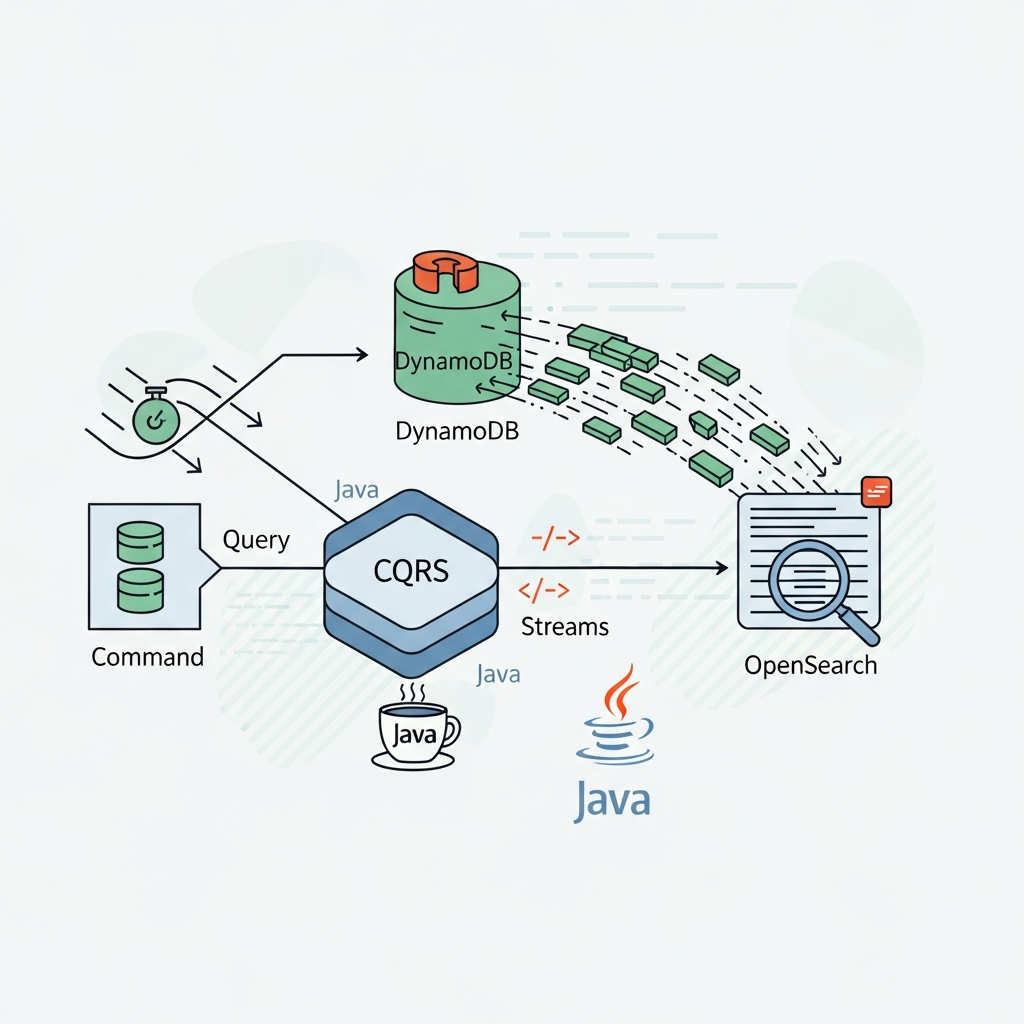
In the realm of modern, scalable enterprise applications, Command Query Responsibility Segregation (CQRS) has emerged as a powerful architectural pattern. By separating the responsibilities of data modification (commands) from data retrieval (queries), CQRS offers significant benefits in terms of scalability, performance, and flexibility. However, this separation often introduces a fundamental challenge: eventual consistency.
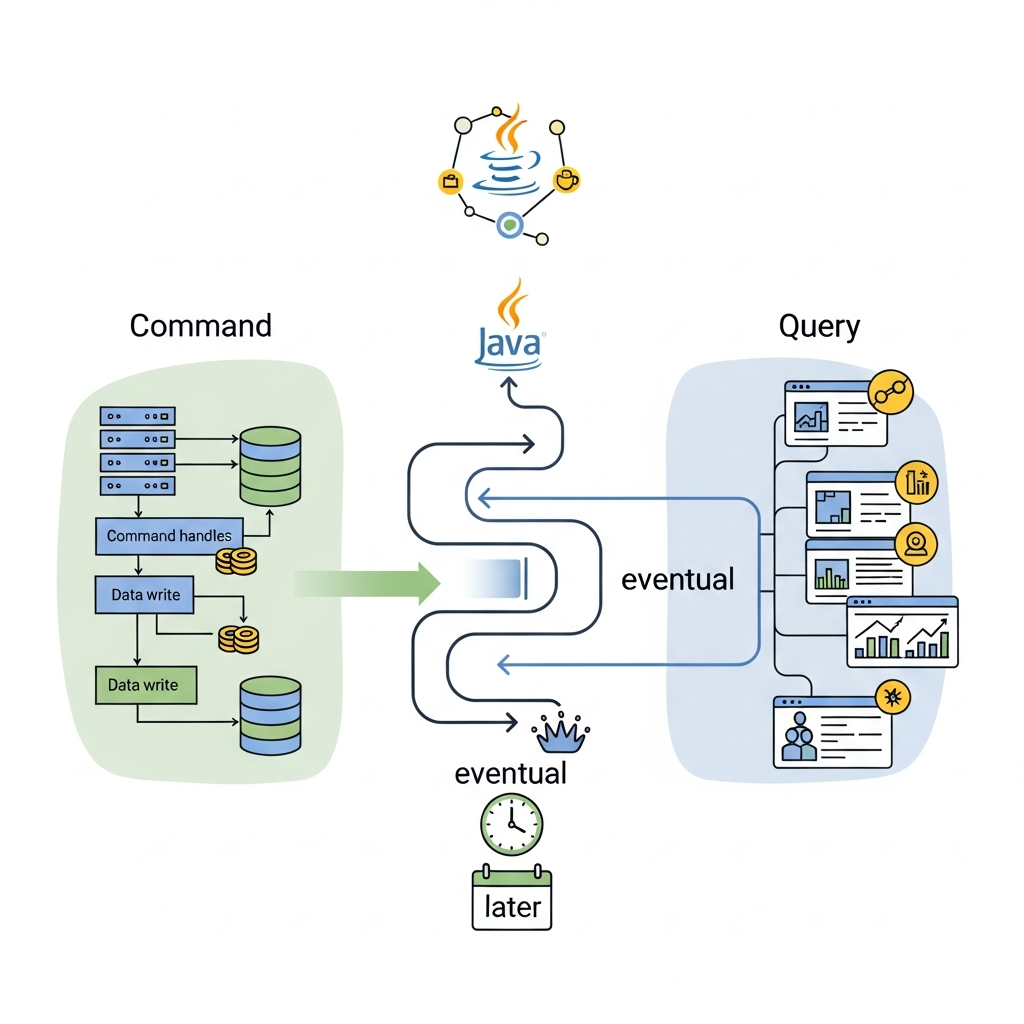
Eventual consistency is a consistency model used in distributed computing that guarantees that, if no new updates are made to a given data item, eventually all accesses to that item will return the last updated value. While this model is crucial for achieving high availability and scalability in distributed systems, it presents unique complexities for developers, especially when user experience demands immediate feedback. This comprehensive guide will delve into the intricacies of handling eventual consistency in CQRS architectures using Java, providing practical strategies, code examples, and best practices to build robust and responsive applications.
Prerequisites
To get the most out of this guide, you should have:
- A solid understanding of Java and object-oriented programming.
- Familiarity with Spring Boot for building enterprise applications.
- Basic knowledge of CQRS and Event Sourcing patterns.
- An understanding of distributed systems concepts.
Understanding CQRS and Event Sourcing
Before diving into consistency, let's briefly recap CQRS and its common companion, Event Sourcing.
CQRS Explained
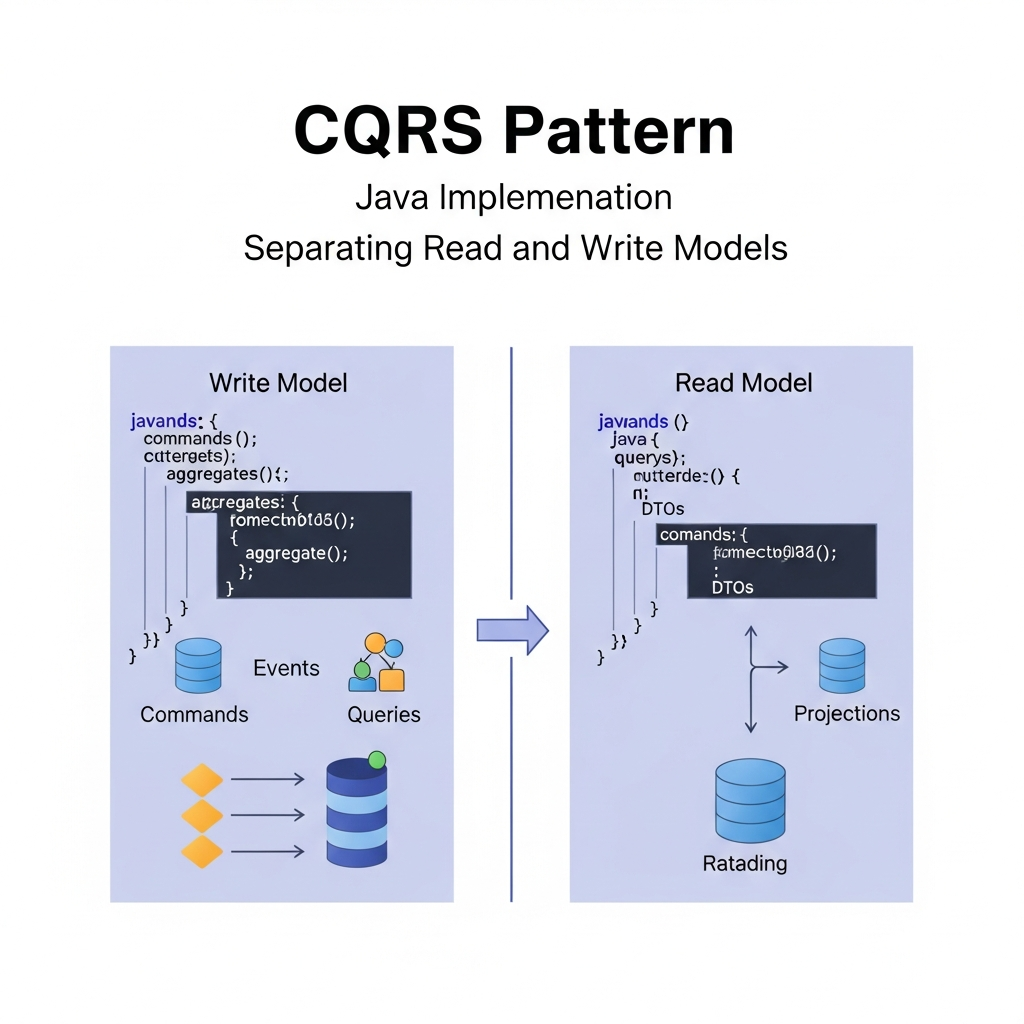
CQRS divides your application into two distinct models:
- Command Model (Write Side): Handles commands that change the state of the application. It's typically optimized for writes, often using a transactional database or an event store.
- Query Model (Read Side): Handles queries that retrieve data. It's optimized for reads, often using denormalized data structures, materialized views, or specialized databases (e.g., NoSQL stores, search engines).
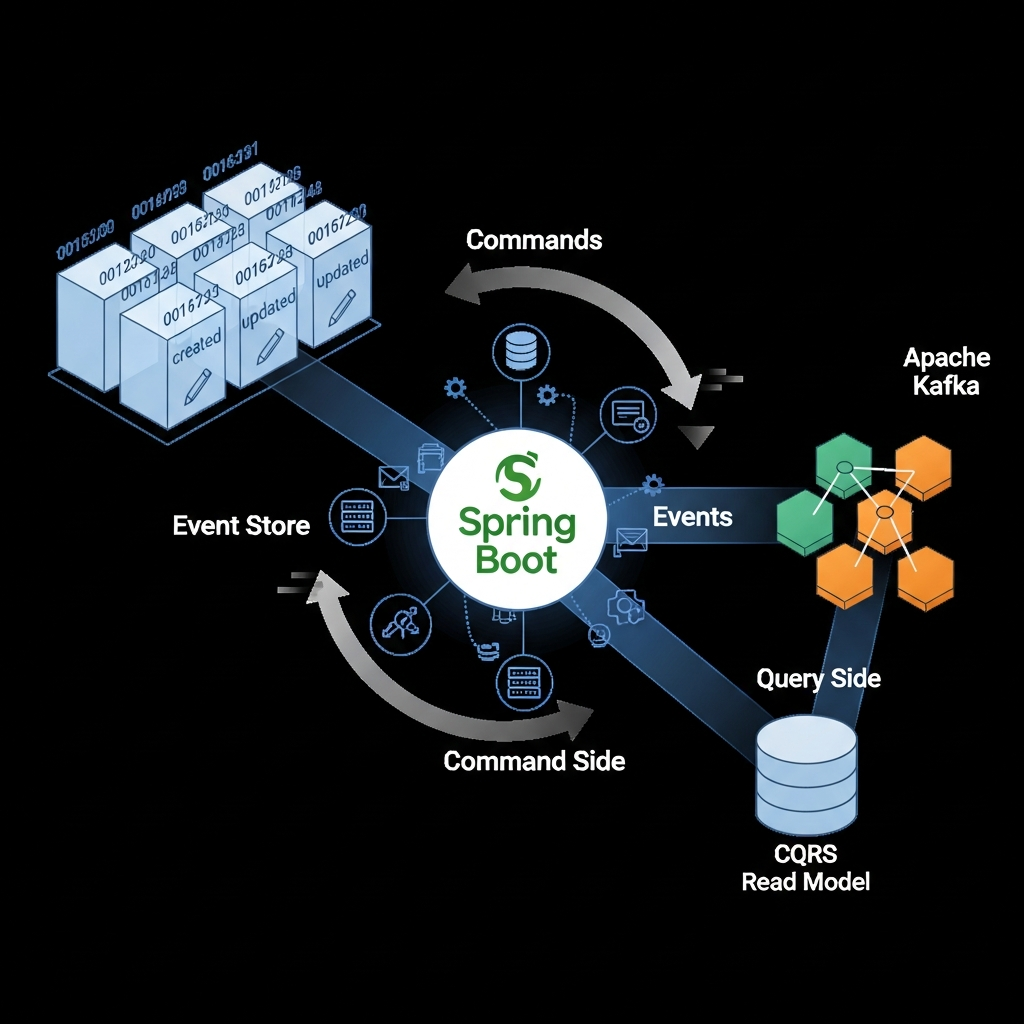
The two sides communicate asynchronously, usually via an event bus or message queue. A command is processed on the write side, which then publishes events. These events are consumed by the read side, which updates its query models (projections) accordingly.
The Role of Event Sourcing
Event Sourcing is a pattern where all changes to application state are stored as a sequence of immutable events. Instead of storing the current state, the system stores the events that led to that state. The current state can then be reconstructed by replaying these events.
When combined with CQRS, Event Sourcing provides a powerful foundation. The command side persists events, which then serve as the source of truth for updating the read models. This asynchronous propagation of events is the primary cause of eventual consistency.
The Nature of Eventual Consistency
Eventual consistency is not a bug; it's a feature. It's a trade-off made to achieve higher availability and scalability in distributed systems, adhering to the CAP theorem's preference for Availability and Partition Tolerance over strong Consistency.
Benefits:
- Scalability: Read and write operations can scale independently.
- Availability: The system can continue to operate even if parts of it are unavailable.
- Performance: Read models can be highly optimized for specific query patterns, leading to faster data retrieval.
- Flexibility: Different data stores can be used for different purposes, leveraging their strengths.
Challenges:
- User Experience: Users might not see their own updates immediately.
- Data Staleness: Queries might return outdated information.
- Complexity: Developers need to explicitly design for and manage consistency.
- Debugging: Tracing issues across asynchronous processes can be difficult.
Understanding these trade-offs is crucial. Not all data requires strong consistency. For instance, updating a user's profile picture can tolerate eventual consistency, whereas a financial transaction typically demands immediate, strong consistency.
Strategies for Handling Eventual Consistency
Managing eventual consistency effectively requires a multi-faceted approach. Here are several key strategies:
1. Read-Your-Own-Writes (RYOW)
This is perhaps the most common and critical strategy. It ensures that after a user performs an update, subsequent reads by that same user reflect the update immediately, even if the read model hasn't fully caught up. This improves user experience significantly.
How it works: When a command is successfully processed, the write-side can temporarily store the updated data or the relevant events in a cache (e.g., Redis) or in the user's session. Subsequent queries from that user first check this temporary store before falling back to the potentially stale read model.
2. Timestamp/Version-Based Reads
To detect and potentially mitigate stale data, each event and read model projection can carry a version number or a timestamp. When a client makes a query, it can optionally provide the last known version/timestamp of the data it has. The query service can then check if its data is newer than the client's version. If not, it can wait (with a timeout) for the update or inform the client.
How it works: Events include a version number. When a read model is updated, its version number is incremented. Clients can request data with a minimum version. If the read model is behind, the query service might poll the event store or an in-memory cache for the required version.
3. Polling/WebSockets for Updates
For scenarios where users need to be notified of updates made by other users, or when a user needs to see their own updates reflected asynchronously, client-side polling or WebSockets can be employed.
How it works: After a command, the client can periodically poll a specific endpoint on the query service for updates (e.g., "Is my order processed yet?"). For real-time updates, WebSockets allow the query service to push changes to connected clients as soon as the read model is updated.
4. Compensating Transactions
In complex distributed processes involving multiple services (e.g., Saga pattern), a failure in one step might require undoing previously completed steps. Compensating transactions are actions designed to reverse the effects of a previous transaction, maintaining business consistency in an eventually consistent system.
How it works: Each step in a long-running business process has a corresponding compensation step. If a subsequent step fails, the system executes the compensation steps for all successful preceding steps. This doesn't roll back time, but rather applies new operations to logically undo previous ones.
5. Materialized Views and Projections
While not a strategy for handling eventual consistency, materialized views and projections are the recipients of updates that cause it. The speed and reliability of their updates are critical. Optimizing their update mechanism is key.
How it works: Event handlers consume events from the event stream and transform them into a denormalized, read-optimized format stored in a dedicated query database (e.g., a NoSQL document store, a search index). These handlers must be idempotent to handle duplicate events gracefully.
Implementing RYOW in Java (Code Example)
Let's illustrate Read-Your-Own-Writes using a simple user profile update scenario. We'll use a temporary in-memory cache for simplicity, though in production, Redis or a similar distributed cache would be preferred.
// 1. Command Model (Write Side)
public class UserAggregate {
    private String userId;
    private String username;
    private String email;
    private int version;

    // ... constructor, apply methods for events ...

    public void updateEmail(String newEmail) {
        // Validate command, then emit event
        // ... business rules ...
        apply(new UserEmailUpdatedEvent(userId, newEmail, version + 1));
    }

    private void apply(UserEmailUpdatedEvent event) {
        this.email = event.getNewEmail();
        this.version = event.getVersion();
    }
}

// 2. Event Definition
public class UserEmailUpdatedEvent {
    private String userId;
    private String newEmail;
    private int version;

    public UserEmailUpdatedEvent(String userId, String newEmail, int version) {
        this.userId = userId;
        this.newEmail = newEmail;
        this.version = version;
    }

    // Getters...
}

// 3. Command Handler
@Service
public class UserCommandHandler {
    private final EventStore eventStore;
    private final CommandResultCache commandResultCache; // Custom cache for RYOW

    public UserCommandHandler(EventStore eventStore, CommandResultCache commandResultCache) {
        this.eventStore = eventStore;
        this.commandResultCache = commandResultCache;
    }

    public void handle(UpdateUserEmailCommand command) {
        UserAggregate user = eventStore.loadAggregate(command.getUserId(), UserAggregate.class);
        user.updateEmail(command.getNewEmail());
        eventStore.saveEvents(user.getUserId(), user.getUncommittedEvents());

        // Store the updated email temporarily for RYOW
        commandResultCache.put(command.getUserId(), "email", command.getNewEmail());
        // Optionally, store the version too
        commandResultCache.put(command.getUserId(), "version", String.valueOf(user.getVersion()));
    }
}

// 4. Query Model (Read Side) - Simplified projection
public class UserProfileView {
    private String userId;
    private String username;
    private String email;
    private int version;

    // Getters, setters
}

// 5. Query Service with RYOW logic
@Service
public class UserQueryService {
    private final UserProfileViewRepository repository; // DAO for UserProfileView
    private final CommandResultCache commandResultCache;

    public UserQueryService(UserProfileViewRepository repository, CommandResultCache commandResultCache) {
        this.repository = repository;
        this.commandResultCache = commandResultCache;
    }

    public UserProfileView getUserProfile(String userId) {
        UserProfileView view = repository.findById(userId).orElse(null);

        // Check cache for RYOW
        String cachedEmail = commandResultCache.get(userId, "email");
        String cachedVersionStr = commandResultCache.get(userId, "version");

        if (cachedEmail != null && view != null) {
            int cachedVersion = Integer.parseInt(cachedVersionStr);
            if (cachedVersion > view.getVersion()) {
                // Cache has a newer version, use it
                view.setEmail(cachedEmail);
                view.setVersion(cachedVersion);
            }
        } else if (cachedEmail != null && view == null) {
            // User created, but read model not yet projected. Return temporary view.
            // In a real scenario, you might wait or return a partial view.
            return new UserProfileView(userId, "unknown", cachedEmail, Integer.parseInt(cachedVersionStr));
        }
        return view;
    }
}

// Simple CommandResultCache interface and implementation
public interface CommandResultCache {
    void put(String aggregateId, String key, String value);
    String get(String aggregateId, String key);
    void invalidate(String aggregateId);
}

@Component
public class InMemoryCommandResultCache implements CommandResultCache {
    // In a real app, use ConcurrentHashMap or a distributed cache like Redis
    private final Map<String, Map<String, String>> cache = new ConcurrentHashMap<>();

    @Override
    public void put(String aggregateId, String key, String value) {
        cache.computeIfAbsent(aggregateId, k -> new ConcurrentHashMap<>()).put(key, value);
    }

    @Override
    public String get(String aggregateId, String key) {
        return cache.getOrDefault(aggregateId, Collections.emptyMap()).get(key);
    }

    @Override
    public void invalidate(String aggregateId) {
        cache.remove(aggregateId);
    }
}
In this example, after updating a user's email, the UserCommandHandler places the new email into a CommandResultCache. The UserQueryService then checks this cache first. If a newer version exists in the cache, it uses that data, ensuring the user sees their update immediately. The cache entries should have a short Time-To-Live (TTL) as the read model will eventually catch up.
Detecting Stale Data with Versioning (Code Example)
Versioning is a robust way to manage consistency, especially when clients might hold stale data or when you need to ensure an update is applied to the correct version of an entity. This is often used for optimistic concurrency control.
// 1. Event Store (simplified) which stores events with versions
public class EventStore {
    private final Map<String, List<Object>> events = new ConcurrentHashMap<>();
    private final Map<String, Integer> currentVersions = new ConcurrentHashMap<>();

    public void saveEvents(String aggregateId, List<Object> newEvents, int expectedVersion) {
        int currentVersion = currentVersions.getOrDefault(aggregateId, 0);
        if (currentVersion != expectedVersion) {
            throw new OptimisticLockingException("Conflict: Expected version " + expectedVersion + ", but found " + currentVersion);
        }
        List<Object> aggregateEvents = events.computeIfAbsent(aggregateId, k -> new ArrayList<>());
        aggregateEvents.addAll(newEvents);
        currentVersions.put(aggregateId, expectedVersion + newEvents.size());
        // In a real system, publish events to a message queue here
    }

    public <T> T loadAggregate(String aggregateId, Class<T> aggregateType) {
        List<Object> aggregateEvents = events.getOrDefault(aggregateId, Collections.emptyList());
        // Reconstruct aggregate state from events
        // ... (omitted for brevity, assume reflection or event handlers)
        return null; // For example purposes
    }

    public int getCurrentVersion(String aggregateId) {
        return currentVersions.getOrDefault(aggregateId, 0);
    }
}

// 2. Read Model with a version field
public class ProductView {
    private String productId;
    private String name;
    private double price;
    private int version; // Version of the aggregate that created this view

    // Getters, setters, constructor
}

// 3. Event Listener updates ProductView and its version
@Service
public class ProductEventListener {
    private final ProductViewRepository repository;

    public ProductEventListener(ProductViewRepository repository) {
        this.repository = repository;
    }

    @EventListener
    public void handle(ProductPriceUpdatedEvent event) {
        ProductView productView = repository.findById(event.getProductId())
                                            .orElse(new ProductView(event.getProductId()));
        productView.setPrice(event.getNewPrice());
        productView.setVersion(event.getVersion()); // Update version from event
        repository.save(productView);
    }
}

// 4. Query Service allowing clients to request minimum version
@Service
public class ProductQueryService {
    private final ProductViewRepository repository;

    public ProductQueryService(ProductViewRepository repository) {
        this.repository = repository;
    }

    public ProductView getProductById(String productId, int minVersion) {
        ProductView product = repository.findById(productId).orElse(null);
        if (product != null && product.getVersion() >= minVersion) {
            return product;
        } else if (product != null && product.getVersion() < minVersion) {
            // Data is stale, client requested a newer version.
            // Option 1: Throw exception (e.g., StaleDataException)
            // Option 2: Poll/wait for update (complex, often better handled client-side)
            // Option 3: Return current state and let client decide.
            throw new StaleDataException("Product data for " + productId + " is stale. Expected version " + minVersion + ", got " + product.getVersion());
        }
        return null; // Product not found
    }
}
When a ProductPriceUpdatedEvent is processed, the ProductEventListener updates the ProductView and crucially sets its version number. The ProductQueryService can then accept a minVersion parameter. If the available ProductView is older than the requested minVersion, the service can indicate staleness, prompting the client to retry or handle the situation.
Leveraging Event Listeners and Message Queues (Code Example)
Message queues (like Apache Kafka, RabbitMQ, or AWS SQS/SNS) are fundamental to decoupling the command and query sides and enabling asynchronous event propagation. They ensure reliable delivery and allow multiple consumers to react to events.
// 1. Command Service publishes events to a message queue
@Service
public class OrderCommandService {
    private final EventStore eventStore;
    private final KafkaTemplate<String, Object> kafkaTemplate; // Spring Kafka

    public OrderCommandService(EventStore eventStore, KafkaTemplate<String, Object> kafkaTemplate) {
        this.eventStore = eventStore;
        this.kafkaTemplate = kafkaTemplate;
    }

    public void placeOrder(PlaceOrderCommand command) {
        OrderAggregate order = new OrderAggregate(command.getOrderId(), command.getCustomerId(), command.getItems());
        order.place(); // This emits OrderPlacedEvent
        eventStore.saveEvents(order.getOrderId(), order.getUncommittedEvents());

        for (Object event : order.getUncommittedEvents()) {
            kafkaTemplate.send("order-events-topic", order.getOrderId(), event);
        }
    }
}

// 2. Read Model Updater (Consumer) listens for events from the queue
@Service
public class OrderReadModelUpdater {
    private final OrderSummaryViewRepository repository;

    public OrderReadModelUpdater(OrderSummaryViewRepository repository) {
        this.repository = repository;
    }

    @KafkaListener(topics = "order-events-topic", groupId = "order-read-model-group")
    public void handleOrderEvent(ConsumerRecord<String, Object> record) {
        Object event = record.value();
        String orderId = record.key();

        if (event instanceof OrderPlacedEvent) {
            OrderPlacedEvent orderPlaced = (OrderPlacedEvent) event;
            OrderSummaryView newView = new OrderSummaryView(orderId, orderPlaced.getCustomerId(), "PLACED", orderPlaced.getTimestamp());
            repository.save(newView);
            System.out.println("OrderSummaryView for " + orderId + " created.");
        } else if (event instanceof OrderShippedEvent) {
            OrderShippedEvent orderShipped = (OrderShippedEvent) event;
            repository.findById(orderId).ifPresent(view -> {
                view.setStatus("SHIPPED");
                view.setLastUpdated(orderShipped.getTimestamp());
                repository.save(view);
                System.out.println("OrderSummaryView for " + orderId + " updated to SHIPPED.");
            });
        } else {
            System.out.println("Unhandled event type: " + event.getClass().getSimpleName());
        }
        // Ensure idempotency: Process events only once or handle duplicates gracefully.
        // E.g., check if the event version is newer than current view version.
    }
}

// Simplified OrderSummaryView (Read Model)
public class OrderSummaryView {
    private String orderId;
    private String customerId;
    private String status;
    private long lastUpdated;

    // Constructor, getters, setters
}

// Simplified OrderAggregate (Write Model)
public class OrderAggregate {
    private String orderId;
    private String customerId;
    private List<String> items;
    private String status;
    private List<Object> uncommittedEvents = new ArrayList<>();

    public OrderAggregate(String orderId, String customerId, List<String> items) {
        this.orderId = orderId;
        this.customerId = customerId;
        this.items = items;
        this.status = "NEW";
    }

    public void place() {
        this.status = "PLACED";
        uncommittedEvents.add(new OrderPlacedEvent(orderId, customerId, System.currentTimeMillis()));
    }

    public List<Object> getUncommittedEvents() {
        return uncommittedEvents;
    }
    // ... other methods, apply logic for events
}

// Simplified Event Definitions
public class OrderPlacedEvent {
    private String orderId; private String customerId; private long timestamp; // Getters
    public OrderPlacedEvent(String orderId, String customerId, long timestamp) { this.orderId = orderId; this.customerId = customerId; this.timestamp = timestamp; }
}
public class OrderShippedEvent {
    private String orderId; private long timestamp; // Getters
    public OrderShippedEvent(String orderId, long timestamp) { this.orderId = orderId; this.timestamp = timestamp; }
}
This setup demonstrates how events from the command side are published to a Kafka topic. The OrderReadModelUpdater listens to this topic and updates the OrderSummaryView in its dedicated read database. This asynchronous flow is the core mechanism enabling eventual consistency. Idempotency in event handlers is crucial here, as message queues can sometimes deliver duplicate messages.
Real-World Use Cases
Eventual consistency is prevalent in many high-scale applications:
E-commerce
- Order Processing: When a customer places an order, the command side processes it immediately. The inventory service might update asynchronously. The user sees an "Order Placed" confirmation, but the exact inventory deduction might be eventually consistent. RYOW ensures the user sees their order in their order history immediately.
- Product Catalog: Updates to product descriptions or prices (command side) are propagated to search indexes and product detail pages (query side) eventually. Users might see slightly outdated information for a brief period, which is generally acceptable.
Social Media
- Likes/Comments: When a user likes a post, the like count on the post (query side) updates eventually. The user's action (command side) is recorded immediately. RYOW ensures the user sees their own like reflected.
- News Feeds: Generating a user's news feed involves aggregating data from many sources. This process is inherently eventually consistent, as new posts, comments, and likes are constantly being published and propagated.
Financial Systems (Reporting/Analytics)
- Transaction Logging: While core transaction processing demands strong consistency, aggregate reports, dashboards, and analytics often rely on materialized views that are eventually consistent. A user might see their latest transaction immediately in their account history (RYOW), but a monthly summary report might update a few minutes later.
Best Practices
Implementing CQRS with eventual consistency requires careful consideration of several best practices:
- Define Consistency Boundaries: Clearly delineate which parts of your system absolutely require strong consistency (e.g., critical financial transfers) and which can tolerate eventual consistency (e.g., user profile updates, analytics). Don't over-engineer strong consistency where it's not needed.
- Communicate with Users: Manage user expectations. Use loading indicators, "last updated" timestamps, or messages like "Your changes are being processed and will appear shortly." This transparency improves UX.
- Idempotent Event Handlers: Design your event consumers (read model updaters) to be idempotent. This means processing the same event multiple times should produce the same result. This is crucial for reliability in message-driven architectures where messages can be redelivered.
- Version Everything: Include version numbers or timestamps in events and read models. This helps in detecting stale data, implementing optimistic concurrency, and ensuring correct ordering of updates.
- Monitor Latency: Implement robust monitoring for your event processing pipeline. Track the lag between an event being published and the corresponding read model being updated. Alert if this latency exceeds acceptable thresholds.
- Error Handling and Retries: Event processing should be resilient to transient failures. Use dead-letter queues (DLQs) for events that cannot be processed after multiple retries, allowing for manual inspection and reprocessing.
- Consider the "Freshness" Requirement: For each query, determine how fresh the data needs to be. Is it acceptable for it to be a few seconds or minutes old? This informs which consistency strategy to apply.
- Test for Eventual Consistency: Your tests should account for the asynchronous nature. Don't assume a read model is updated immediately after a command. Introduce waits or polling mechanisms in integration tests.
Common Pitfalls
Avoid these common mistakes when dealing with eventual consistency:
- Ignoring User Expectations: Assuming users understand eventual consistency can lead to frustration and support tickets. Always design the UI/UX with eventual consistency in mind.
- Over-Engineering Consistency: Applying strong consistency mechanisms (e.g., distributed transactions) to all data, even when not strictly necessary, can negate the benefits of CQRS and lead to complex, slow, and brittle systems.
- Lack of Observability: Without proper logging, tracing, and monitoring of your event pipeline, diagnosing why a read model is stale or an event failed to process becomes a nightmare.
- Race Conditions in Read Model Updates: If multiple events can update the same read model concurrently, ensure your update logic (e.g., using optimistic locking or transactionality within the read model's database) prevents race conditions that could lead to incorrect state.
- Not Handling Duplicate Events: Failing to make event handlers idempotent can lead to corrupted read models or incorrect aggregate states if a message queue redelivers an event.
- Blocking on Read Model Updates: In an attempt to achieve immediate consistency, some developers might block the command processing until the read model is updated. This defeats the purpose of CQRS's asynchronous nature and introduces tight coupling and performance bottlenecks.
- Misunderstanding the Source of Truth: The event store (or write model database) is the ultimate source of truth. The read models are merely projections. Never try to derive events or update the write model based on the read model's state.
Conclusion
Eventual consistency is an inherent characteristic of scalable, distributed CQRS architectures. While it introduces complexities, it is a powerful trade-off that enables high performance, availability, and flexibility. By understanding its nature and applying strategies like Read-Your-Own-Writes, versioning, and leveraging message queues, Java developers can effectively manage this consistency model.
The key lies in thoughtful design, clear communication with users, robust monitoring, and disciplined adherence to best practices. Embrace eventual consistency where it makes sense, and your CQRS-based Java applications will be well-equipped to handle the demands of modern enterprise-scale systems. The journey to mastering eventual consistency is one of continuous learning and careful architectural choices, leading to more resilient and performant software solutions.

Written by
CodewithYohaFull-Stack Software Engineer with 7+ years of experience in Java, Spring Boot, and cloud architecture across AWS, Azure, and GCP. Writing production-grade engineering patterns for developers who ship real software.