Introduction
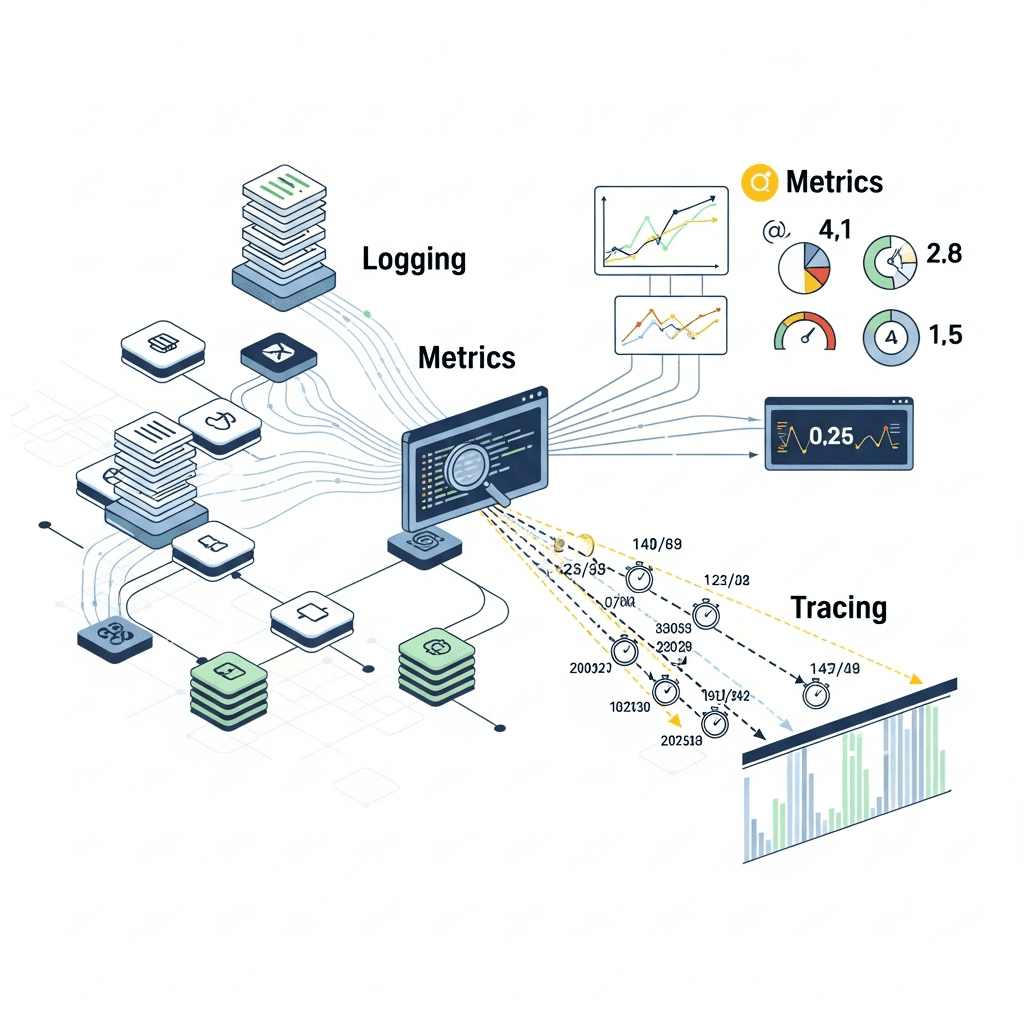
In the intricate world of microservices, maintaining a robust system requires more than just traditional monitoring. Observability has emerged as a key practice, enabling developers and operators to gain insights into the system's health, performance, and operations. This blog explores the three pillars of observability: logging, metrics, and tracing, and how they contribute to effective microservices management.
The Importance of Observability
Observability allows teams to understand and diagnose system behavior in real-time. Unlike monolithic architectures, microservices involve numerous independent services interacting with each other. Observability provides the necessary visibility into these interactions, helping to identify bottlenecks, failures, and opportunities for optimization.
Logging
Logging is the foundational pillar of observability. It involves recording events, errors, and other significant occurrences within a system. Logs provide a chronological record that can be invaluable for debugging and auditing.
Log Aggregation and Analysis
Centralizing logs from all services into a single platform, such as ELK Stack (Elasticsearch, Logstash, Kibana), allows for efficient searching and visualization. This aggregation helps in correlating events across services.
{
  "timestamp": "2023-10-01T12:00:00Z",
  "level": "ERROR",
  "service": "payment-service",
  "message": "Transaction failed due to insufficient funds"
}
Metrics
Metrics offer a quantitative measure of various attributes of the system, such as latency, request rates, and error rates. They are crucial for performance monitoring and capacity planning.
Collecting Metrics
Tools like Prometheus and Grafana are popular choices for collecting and visualizing metrics. Prometheus scrapes metrics from configured endpoints, while Grafana provides rich dashboards for analysis.
- job_name: 'microservices'
  static_configs:
  - targets: ['localhost:9090', 'localhost:8080']
Tracing
Tracing provides a view into the flow of requests across services. It helps to pinpoint where latency occurs and how requests propagate through the system.
Implementing Distributed Tracing
Using tools like Jaeger or Zipkin, distributed tracing can be implemented to track requests as they move through different services. This is essential for understanding service dependencies and optimizing performance.
import io.jaegertracing.Configuration;

Configuration config = new Configuration("my-service");
config.getTracer();
Integrating Observability Tools
Integrating logging, metrics, and tracing into a cohesive observability strategy involves using platforms that support all three aspects. OpenTelemetry is an emerging standard for such integrations, providing APIs and SDKs for diverse environments.
Best Practices
- Consistent Logging: Ensure all services follow a consistent logging format.
- Alerting: Set up alerts for critical metrics to proactively address issues.
- Correlate Data: Use correlation IDs to link logs, metrics, and traces for comprehensive analysis.
Conclusion
Observability is not just a set of tools and practices; it's a cultural shift towards proactive system management. By leveraging logging, metrics, and tracing, teams can achieve a deep understanding of their microservices ecosystems, leading to more reliable and performant applications. As microservices continue to grow in complexity, observability will remain a critical component of modern software development and operations.

Written by
CodewithYohaFull-Stack Software Engineer with 7+ years of experience in Java, Spring Boot, and cloud architecture across AWS, Azure, and GCP. Writing production-grade engineering patterns for developers who ship real software.