Conquering Technical Debt: Refactoring Strategies for Legacy Code

Introduction
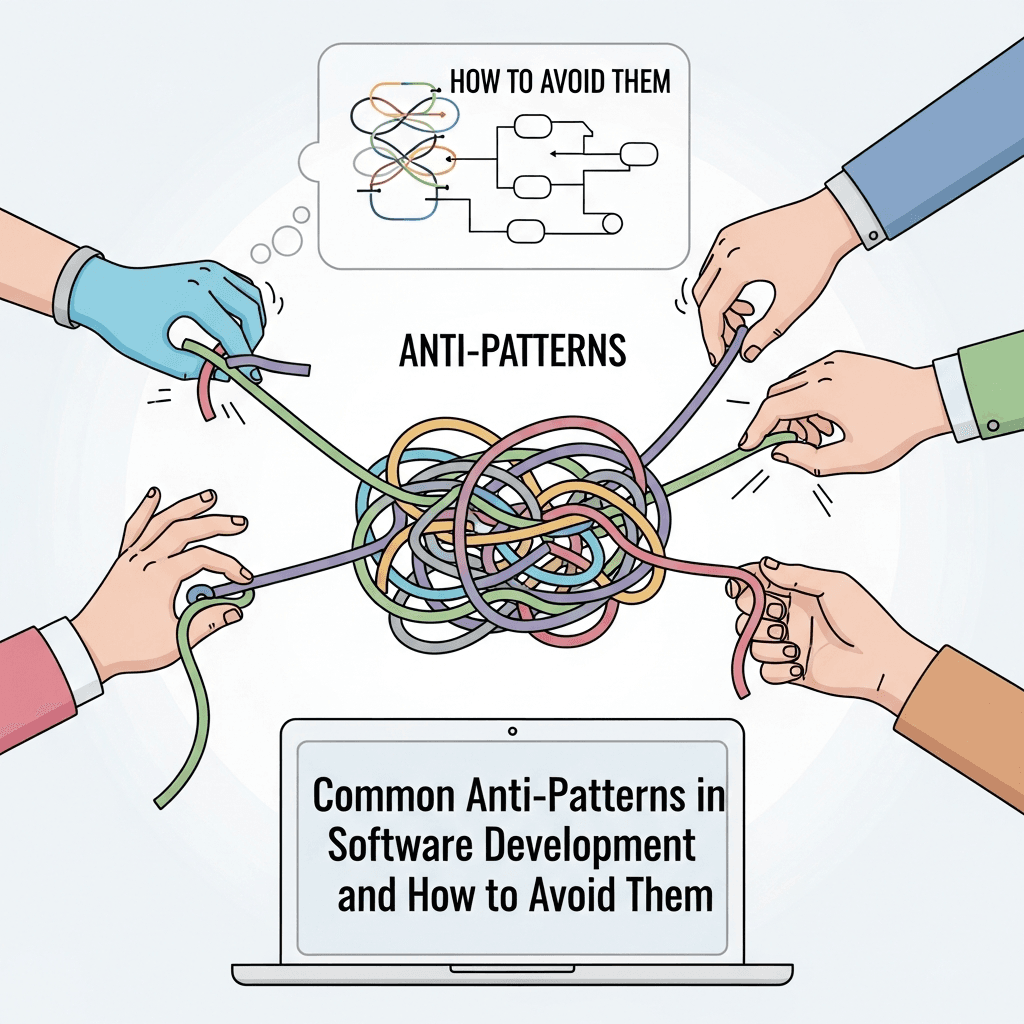
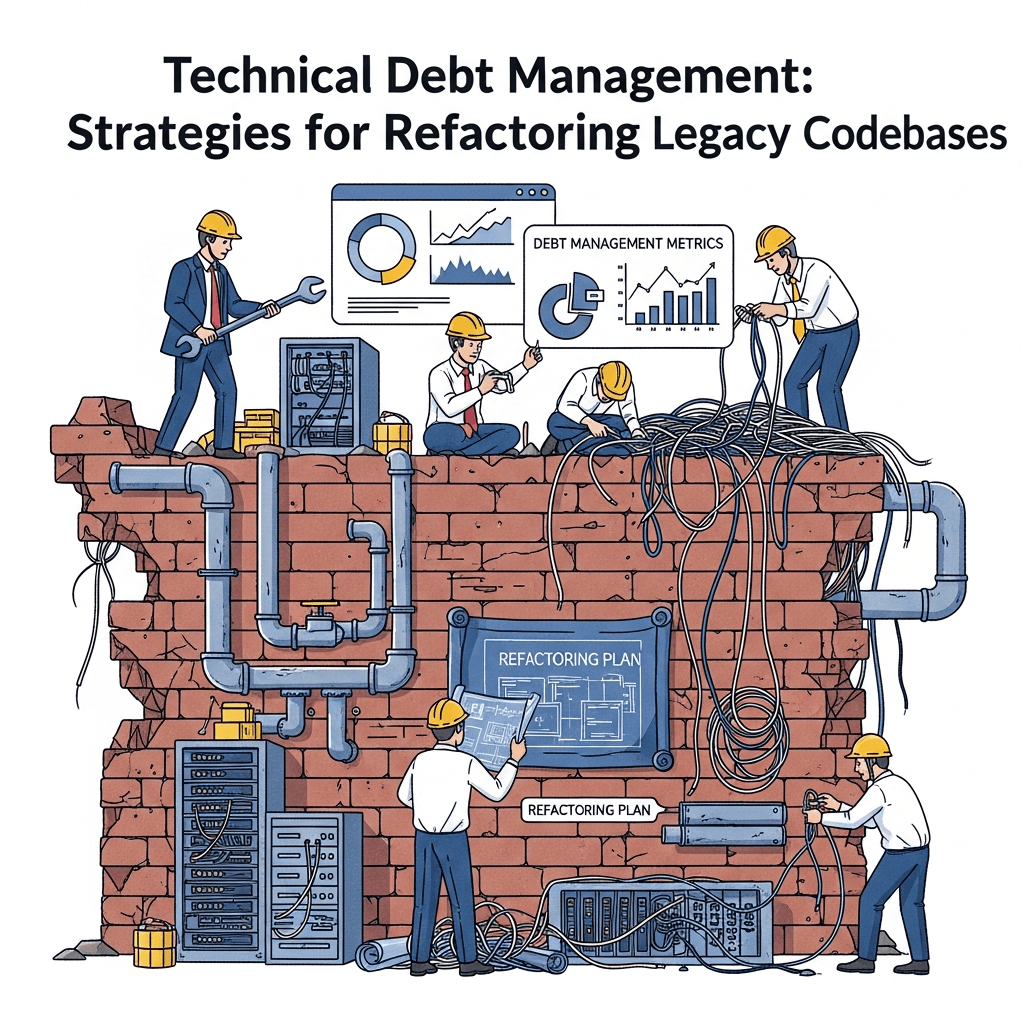
In the fast-paced world of software development, deadlines loom large, and sometimes, corners are cut. This often leads to the accumulation of "technical debt" – a metaphor for the implied cost of additional rework caused by choosing an easy solution now instead of using a better approach that would take longer. Just like financial debt, technical debt, if left unmanaged, accrues interest, making future development slower, more expensive, and increasingly painful. For organizations burdened with legacy codebases, technical debt can become a crippling force, hindering innovation and draining resources.
This comprehensive guide will equip you with the knowledge and strategies to effectively manage and reduce technical debt, focusing specifically on refactoring legacy codebases. We'll delve into identifying the debt, prioritizing its repayment, and employing systematic refactoring techniques to transform your code into a maintainable, extensible, and high-quality asset. Our goal is to empower you to navigate the complexities of legacy systems and lead your team towards a healthier, more productive development environment.
Prerequisites
To get the most out of this article, a basic understanding of software development principles, object-oriented programming (OOP) concepts, and familiarity with version control systems (like Git) will be beneficial. While code examples will be provided, the core concepts are language-agnostic.
1. Understanding Technical Debt: What It Is and Why It Matters
Technical debt is a critical concept in software engineering, representing the future cost incurred by present shortcuts. It's not inherently bad; sometimes, taking on deliberate debt (like an MVP with known compromises) can be a strategic business decision. However, inadvertent debt, often caused by poor design, lack of understanding, or insufficient testing, is almost always detrimental.
Types of Technical Debt
- Deliberate Debt: Consciously choosing a quicker, less ideal solution to meet a deadline or validate a concept (e.g., building an MVP). The intent is to repay it later.
- Inadvertent/Accidental Debt: Arises from poor design decisions, lack of knowledge, insufficient experience, or simply not having enough time to do things right. This is often the most insidious type.
- Bit Rot/Environmental Debt: Code that becomes outdated due to changes in external libraries, operating systems, or hardware, even if it was well-written initially.
- Architectural Debt: Poorly designed system architecture that makes scaling, modifying, or integrating new features extremely difficult.
The Impact of Technical Debt
Unmanaged technical debt has far-reaching consequences:
- Reduced Development Speed: Every new feature requires navigating a maze of brittle, complex code, leading to slower delivery.
- Increased Bugs: Fragile code is prone to errors, increasing testing effort and post-release fixes.
- Higher Maintenance Costs: Debugging and patching become time-consuming and expensive.
- Developer Morale Drain: Working with messy, difficult-to-change code is frustrating and demotivating.
- Difficulty in Onboarding: New team members struggle to understand and contribute to the codebase.
- Risk Aversion: Teams become hesitant to make significant changes, stifling innovation.
2. Identifying Technical Debt: Unmasking the Culprits
Before you can repay technical debt, you must first identify where it resides and what form it takes. This requires a combination of tools, metrics, and human insight.
Code Smells
Code smells are surface indications that there might be a deeper problem in the code. They don't necessarily mean the code is wrong, but they suggest potential issues. Common code smells include:
- Long Methods/Functions: Methods with too many lines of code, doing too many things.
- Large Classes: Classes with too many responsibilities or fields.
- Duplicate Code: Identical or very similar code blocks appearing in multiple places.
- Feature Envy: A method that seems more interested in a class other than the one it lives in.
- Shotgun Surgery: A change requiring many small changes to many different classes.
- Divergent Change: A class that is changed in many different ways for different reasons.
- Comments as an Excuse: Excessive comments explaining overly complex code, rather than simplifying the code itself.
Static Analysis Tools
These tools automatically scan your code for potential issues, code smells, security vulnerabilities, and adherence to coding standards. They provide objective, quantifiable data.
- SonarQube: A widely used open-source platform for continuous inspection of code quality and security. It supports numerous languages.
- ESLint/TSLint (JavaScript/TypeScript): Enforces coding styles and identifies problematic patterns.
- Pylint/Flake8 (Python): Similar tools for Python code quality and style checking.
- Checkstyle/PMD (Java): Tools for checking Java source code for adherence to coding standards.
Code Metrics
Quantifiable measurements of code characteristics can point to areas of high complexity or low quality.
- Cyclomatic Complexity: Measures the number of independent paths through a function. High complexity often indicates a hard-to-test and hard-to-understand function.
- Test Coverage: The percentage of code executed by automated tests. Low coverage indicates high risk when refactoring.
- Lines of Code (LOC): While not a direct indicator of debt, extremely large files or functions often correlate with complexity.
- Churn/Change Frequency: Modules that are frequently changed and have high complexity are often "hot spots" for technical debt.
Developer Feedback and Code Reviews
Your development team is a valuable source of information. Regular code reviews can flag issues early, and developers often know which parts of the codebase are most painful to work with. Encourage a culture where discussing and documenting technical debt is normal.
Consider this Python function as an example of code smells:
def process_customer_order(customer_data, order_details, payment_info, shipping_address, inventory_service, email_service):
    # Validate customer data
    if not customer_data.get("id") or not customer_data.get("email"):
        print("Invalid customer data")
        return False

    # Validate order details
    if not order_details.get("items") or not order_details.get("total_amount") <= 0:
        print("Invalid order details")
        return False

    # Process payment
    payment_successful = False
    try:
        # Simulate payment gateway interaction
        if payment_info.get("card_number") and payment_info.get("cvv"):
            print(f"Processing payment for {order_details['total_amount']}")
            # ... complex payment logic ...
            payment_successful = True
        else:
            print("Missing payment info")
    except Exception as e:
        print(f"Payment failed: {e}")
        return False

    if not payment_successful:
        return False

    # Update inventory
    for item in order_details["items"]:
        if not inventory_service.update_stock(item["product_id"], item["quantity"]):
            print(f"Failed to update stock for {item['product_id']}")
            # Rollback payment? This is getting complex!
            return False

    # Generate invoice
    invoice_id = f"INV-{customer_data['id']}-{order_details['total_amount']}"
    print(f"Invoice {invoice_id} generated.")

    # Send confirmation email
    email_service.send_email(
        customer_data["email"],
        "Order Confirmation",
        f"Your order {invoice_id} has been placed successfully. Total: {order_details['total_amount']}"
    )

    print("Order processed successfully!")
    return True
This process_customer_order function exhibits several code smells: it's a long method, performs multiple responsibilities (validation, payment, inventory, invoicing, emailing), and has high cyclomatic complexity due to numerous conditional branches. This makes it difficult to test, understand, and modify.
3. Prioritizing Technical Debt: Where to Start?
Once identified, not all technical debt is created equal. Prioritization is crucial to ensure your refactoring efforts yield the most significant return on investment.
Impact vs. Effort Matrix
A common approach is to plot identified debt items on a 2x2 matrix:
- High Impact, Low Effort (Quick Wins): Tackle these first. They provide immediate relief and build momentum.
- High Impact, High Effort (Major Initiatives): These require careful planning and dedicated resources. They might be broken down into smaller, manageable tasks.
- Low Impact, Low Effort (Minor Improvements): Address these when time permits or as part of the Boy Scout Rule (see next section).
- Low Impact, High Effort (Avoid/Defer): These are rarely worth the investment unless circumstances change.
Hot Spots and Business Value
Focus on areas of the codebase that:
- Are frequently changed: High-churn modules are where debt causes the most pain.
- Are critical to business operations: Debt in core business logic can lead to outages or incorrect data.
- Are blockers for new features: Refactor debt that prevents or significantly slows down the delivery of valuable new functionality.
- Have high defect rates: Areas that constantly produce bugs are prime candidates for refactoring.
Engage product owners and business stakeholders in the prioritization process. Explain the business benefits of reducing technical debt (faster delivery, fewer bugs, better stability) in terms they understand, rather than purely technical terms.
4. Strategies for Refactoring – The Boy Scout Rule
The "Boy Scout Rule" states: "Always leave the campground cleaner than you found it." Applied to code, this means whenever you touch a piece of code, take a moment to improve it, even if it's just a small change. This philosophy promotes continuous, incremental refactoring.
Instead of large, disruptive refactoring projects, the Boy Scout Rule encourages developers to:
- Rename a poorly named variable or function.
- Extract a small, obvious method.
- Remove duplicate code.
- Add a missing unit test.
- Improve a comment or remove an outdated one.
These small, consistent improvements prevent debt from accumulating rapidly and distribute the refactoring effort naturally across the development cycle. It fosters a culture of ownership and continuous improvement without requiring dedicated "refactoring sprints" for every minor issue.
5. Automated Testing – Your Safety Net for Refactoring
Refactoring without a robust suite of automated tests is like performing surgery blindfolded. Tests provide the crucial safety net, ensuring that your changes haven't introduced regressions or altered existing functionality. Before you even think about refactoring a legacy component, ensure it has adequate test coverage.
Types of Tests Essential for Refactoring
- Unit Tests: Test individual components (functions, classes) in isolation. These are the fastest and most granular, perfect for verifying small refactoring steps.
- Integration Tests: Verify that different components or services interact correctly. Useful for ensuring that the refactored module still integrates properly with its dependencies.
- Characterization Tests (Golden Master Tests): For truly untestable legacy code, these tests capture the existing behavior of a system, even if that behavior is buggy. You run the code, capture its output (the "golden master"), and then assert that future runs produce the same output. This allows you to refactor incrementally, ensuring you don't change the external behavior while improving the internal structure.
Example: Adding Characterization Tests
Let's take our process_customer_order function from earlier. It's complex and likely has no tests. We can start by writing a characterization test.
import unittest
from unittest.mock import MagicMock, patch

# Assume process_customer_order is in a module named 'order_processor'
# from order_processor import process_customer_order

# For demonstration, let's redefine the original function here
def process_customer_order(customer_data, order_details, payment_info, shipping_address, inventory_service, email_service):
    # Original complex logic (as shown in section 2)
    output_log = []

    # Validate customer data
    if not customer_data.get("id") or not customer_data.get("email"):
        output_log.append("Invalid customer data")
        return False, output_log

    # Validate order details
    if not order_details.get("items") or not order_details.get("total_amount") <= 0:
        output_log.append("Invalid order details")
        return False, output_log

    # Process payment
    payment_successful = False
    try:
        if payment_info.get("card_number") and payment_info.get("cvv"):
            output_log.append(f"Processing payment for {order_details['total_amount']}")
            # ... complex payment logic ...
            payment_successful = True
        else:
            output_log.append("Missing payment info")
    except Exception as e:
        output_log.append(f"Payment failed: {e}")
        return False, output_log

    if not payment_successful:
        return False, output_log

    # Update inventory
    for item in order_details["items"]:
        if not inventory_service.update_stock(item["product_id"], item["quantity"]):
            output_log.append(f"Failed to update stock for {item['product_id']}")
            return False, output_log

    # Generate invoice
    invoice_id = f"INV-{customer_data['id']}-{order_details['total_amount']}"
    output_log.append(f"Invoice {invoice_id} generated.")

    # Send confirmation email
    email_service.send_email(
        customer_data["email"],
        "Order Confirmation",
        f"Your order {invoice_id} has been placed successfully. Total: {order_details['total_amount']}"
    )

    output_log.append("Order processed successfully!")
    return True, output_log # Modified to return log for characterization


class TestProcessCustomerOrderCharacterization(unittest.TestCase):

    def setUp(self):
        self.mock_inventory_service = MagicMock()
        self.mock_email_service = MagicMock()

        self.valid_customer = {"id": "C123", "email": "test@example.com"}
        self.valid_order = {"items": [{"product_id": "P001", "quantity": 2}], "total_amount": 100}
        self.valid_payment = {"card_number": "1234...", "cvv": "567"}
        self.valid_shipping = {"address": "123 Main St"}

    def test_successful_order_processing(self):
        # Mock external dependencies to control their behavior
        self.mock_inventory_service.update_stock.return_value = True

        # Call the original function and capture its output/return value
        success, log = process_customer_order(
            self.valid_customer,
            self.valid_order,
            self.valid_payment,
            self.valid_shipping,
            self.mock_inventory_service,
            self.mock_email_service
        )

        # Assert the overall outcome and the captured log
        self.assertTrue(success)
        expected_log = [
            "Processing payment for 100",
            "Invoice INV-C123-100 generated.",
            "Order processed successfully!"
        ]
        self.assertEqual(log, expected_log)

        # Assert interactions with mocked services
        self.mock_inventory_service.update_stock.assert_called_once_with("P001", 2)
        self.mock_email_service.send_email.assert_called_once()

    def test_invalid_customer_data(self):
        success, log = process_customer_order(
            {"id": "", "email": ""}, # Invalid data
            self.valid_order,
            self.valid_payment,
            self.valid_shipping,
            self.mock_inventory_service,
            self.mock_email_service
        )
        self.assertFalse(success)
        self.assertEqual(log, ["Invalid customer data"])
        self.mock_inventory_service.update_stock.assert_not_called()
        self.mock_email_service.send_email.assert_not_called()

    # ... add more characterization tests for other scenarios (payment failure, inventory failure, etc.)
This test captures the existing behavior. Now, when you refactor process_customer_order, you can run these tests to ensure you haven't accidentally changed how it works. Once you have good characterization tests, you can start breaking down the function and writing proper unit tests for the new, smaller components.
6. Micro-refactoring Techniques: Small, Targeted Improvements
Micro-refactorings are small, atomic transformations that improve the internal structure of code without changing its external behavior. These are the workhorses of the Boy Scout Rule.
Key Micro-refactoring Techniques
- Extract Method/Function: The most common refactoring. Turn a code fragment into a new method whose name explains the purpose of the fragment. This reduces method length and improves readability.
- Rename Variable/Method/Class: Choose clear, descriptive names. Good names make code self-documenting.
- Introduce Parameter Object: If a method has too many parameters, group related ones into a new class.
- Replace Conditional with Polymorphism: If you have a complex
if-elif-elseorswitchstatement that varies behavior based on type or value, consider using polymorphism by creating subclasses. - Move Method/Field: Relocate methods or fields to the classes where they are most logically used.
- Consolidate Conditional Expression: If you have a sequence of conditionals that lead to the same result, combine them into a single condition.
Example: Extract Method
Let's refactor our process_customer_order function using "Extract Method" to separate the validation logic.
def _validate_customer_data(customer_data, output_log):
    if not customer_data.get("id") or not customer_data.get("email"):
        output_log.append("Invalid customer data")
        return False
    return True

def _validate_order_details(order_details, output_log):
    if not order_details.get("items") or not order_details.get("total_amount") <= 0:
        output_log.append("Invalid order details")
        return False
    return True

# Refactored process_customer_order (excerpt)
def process_customer_order_refactored(customer_data, order_details, payment_info, shipping_address, inventory_service, email_service):
    output_log = []

    if not _validate_customer_data(customer_data, output_log):
        return False, output_log

    if not _validate_order_details(order_details, output_log):
        return False, output_log

    # ... rest of the logic ...

    # Before:
    # if not customer_data.get("id") or not customer_data.get("email"):
    #     output_log.append("Invalid customer data")
    #     return False, output_log

    # if not order_details.get("items") or not order_details.get("total_amount") <= 0:
    #     output_log.append("Invalid order details")
    #     return False, output_log
This small step immediately makes process_customer_order_refactored shorter and more readable. We can then continue extracting other responsibilities (payment processing, inventory update, email sending) into their own, testable functions or classes, building up a cleaner architecture incrementally.
7. Macro-refactoring and Architectural Debt: Tackling Big Problems
Sometimes, micro-refactorings aren't enough. When the technical debt is deeply embedded in the system's architecture, larger, more strategic approaches are needed. These often involve untangling large, monolithic applications.
The Strangler Fig Pattern
Coined by Martin Fowler, this pattern is ideal for incrementally replacing a legacy system with a new one. Instead of a "big bang" rewrite, you identify areas of functionality, build new services or components around them, and gradually redirect traffic from the old system to the new. The new system "strangles" the old one until it can be retired.
How it works:
- Identify a Seam: Find a logical boundary in the monolith where a new service can take over a specific piece of functionality.
- Build New Functionality: Develop the new service/component in parallel with the old system.
- Divert Traffic: Use a proxy or API gateway to route requests for the specific functionality to the new service.
- Repeat: Continue identifying seams, building new services, and diverting traffic until the monolith is reduced or eliminated.
Example (Conceptual):
A monolithic e-commerce application has a process_order module. You could build a new Order Processing Service that handles new orders. Initially, the monolith still takes orders. Then, you introduce an API Gateway. New order requests go to the new service. Over time, more order-related functionalities are moved, and the old process_order module in the monolith becomes unused and can be removed.
Anti-Corruption Layer (ACL)
When integrating a new system with an old, complex, and potentially poorly designed legacy system, an ACL acts as a translation layer. It prevents the legacy system's model and design from "corrupting" the clean design of the new system.
How it works:
- The ACL translates data and calls between the clean domain model of the new system and the often convoluted model of the legacy system.
- It acts as a buffer, isolating the new system from the complexities and inconsistencies of the old.
Use Case: Migrating to a microservices architecture where new services need to interact with existing legacy databases or APIs. The ACL ensures the new service's domain model remains clean and consistent, mapping its requests and responses to the legacy system's format.
Domain-Driven Design (DDD) for Bounded Contexts
DDD can be powerful for architectural refactoring. It encourages defining clear "bounded contexts" – explicit boundaries within which a particular domain model is consistent. This helps in breaking down a large, complex domain into smaller, more manageable parts, often aligning well with a microservices strategy.
8. Version Control and Branching Strategies: Managing Change
Effective use of version control is paramount when refactoring, especially in a team environment. It allows for safe experimentation, collaboration, and rollback capabilities.
Key Practices
- Small, Frequent Commits: Each commit should represent a single, atomic logical change. This makes it easier to review, revert, and understand the history of changes.
- Feature Branches (or Topic Branches): Create a dedicated branch for each refactoring task. This isolates changes and prevents interference with ongoing development on the main branch.
- Trunk-Based Development (TBD): For high-performing teams, TBD with very short-lived branches and frequent merges to
maincan reduce merge conflicts and keep the codebase consistently shippable. This requires strong test automation and CI/CD. - Clear Commit Messages: Explain why a change was made, not just what was changed. This context is invaluable for future maintainers.
- Rebasing vs. Merging: Understand when to rebase (to create a clean, linear history for your feature branch) and when to merge (to preserve history of merges). For refactoring, rebasing a feature branch before merging can often lead to a cleaner
mainbranch history.
9. Integrating Refactoring into the Workflow: Making it a Habit
Refactoring shouldn't be an afterthought or a one-off event. It needs to be an integral part of your development workflow.
Dedicated Refactoring Time
- Allocate a Percentage: Many teams allocate 10-20% of each sprint or iteration to refactoring and technical debt repayment. This makes it a planned activity, not just something done "if there's time."
- "Refactoring Sprints": Occasionally, a team might dedicate an entire sprint to tackling a particularly large piece of technical debt. This should be an exception, not the norm, and only done with clear business alignment.
Definition of Done (DoD)
Incorporate refactoring and code quality into your Definition of Done for user stories or tasks. For example, a task isn't truly "done" until:
- It has automated tests.
- It meets code quality standards (e.g., passing static analysis).
- Any related code smells have been addressed (Boy Scout Rule).
Technical Debt Backlog
Maintain a separate backlog or a specific label in your existing backlog for technical debt items. Treat these items like any other feature, estimating their effort and prioritizing them based on business impact.
Continuous Integration and Continuous Delivery (CI/CD)
CI/CD pipelines are essential for refactoring. They ensure that every change:
- Is automatically built and tested.
- Undergoes static analysis.
- Is deployed quickly, allowing for rapid feedback.
This rapid feedback loop is critical for catching regressions introduced during refactoring early.
10. Best Practices for Sustainable Debt Management
Managing technical debt is an ongoing process. Here are some best practices to maintain a healthy codebase:
- Code Reviews: Implement mandatory, thorough code reviews. They are excellent for catching new debt before it enters the codebase and for sharing knowledge.
- Pair Programming: Working in pairs can lead to higher quality code, fewer defects, and built-in code review, naturally reducing the creation of new debt.
- Knowledge Sharing and Documentation: Ensure that knowledge about the system, its architecture, and any existing debt is well-documented and shared among the team. This prevents new debt from being introduced due to a lack of understanding.
- Continuous Learning: Encourage developers to stay updated with best practices, new technologies, and design patterns. A more skilled team naturally produces higher quality code.
- Measure and Monitor: Regularly review your technical debt metrics (e.g., static analysis reports, test coverage, cyclomatic complexity). Celebrate improvements and use the data to justify further refactoring efforts.
- Communicate with Stakeholders: Keep product owners and business stakeholders informed about the state of technical debt, its impact on delivery, and the progress of refactoring efforts. Frame it in terms of business value.
Common Pitfalls to Avoid
While refactoring is beneficial, certain approaches can lead to more problems than they solve:
- The "Big Bang" Rewrite: Attempting to rewrite an entire legacy system from scratch. This is often a multi-year effort, rarely successful, high-risk, and often leads to the same problems as the original system. Incremental approaches like the Strangler Fig Pattern are almost always superior.
- Refactoring Without Tests: This is a recipe for disaster. You will introduce regressions, erode confidence, and likely give up on the refactoring effort.
- Ignoring Stakeholder Communication: Refactoring takes time and resources. Without clear communication and buy-in from product and business stakeholders, these efforts can be seen as wasted time.
- Not Stopping New Debt Creation: While repaying existing debt is important, it's equally crucial to implement practices that prevent new debt from being created (e.g., code reviews, DoD, quality gates).
- Over-Engineering: Refactoring doesn't mean building the most abstract, infinitely extensible system for every module. Focus on simplicity and only refactor what's necessary to meet current and foreseeable future needs.
- Perfectionism: Don't let the perfect be the enemy of the good. Incremental improvements are better than waiting for the ideal scenario that never comes.
Conclusion
Technical debt is an inescapable reality in software development. However, it doesn't have to be a death sentence for your projects or your team's morale. By adopting a systematic, disciplined approach to technical debt management, you can transform a brittle, complex legacy codebase into a flexible, maintainable asset.
Remember the key principles: identify the debt, prioritize strategically, build a strong testing safety net, employ micro-refactorings incrementally, and be prepared for macro-architectural changes when necessary. Integrate refactoring into your daily workflow, foster a culture of quality, and always communicate the value of your efforts to the wider business.
Conquering technical debt is not a one-time event but a continuous journey of improvement. By embracing these strategies, you empower your team to build better software, deliver features faster, and ultimately, drive greater business value. Start small, stay consistent, and watch your codebase, and your team, thrive.
Written by
CodewithYohaFull-Stack Software Engineer with 7+ years of experience in Java, Spring Boot, and cloud architecture across AWS, Azure, and GCP. Writing production-grade engineering patterns for developers who ship real software.