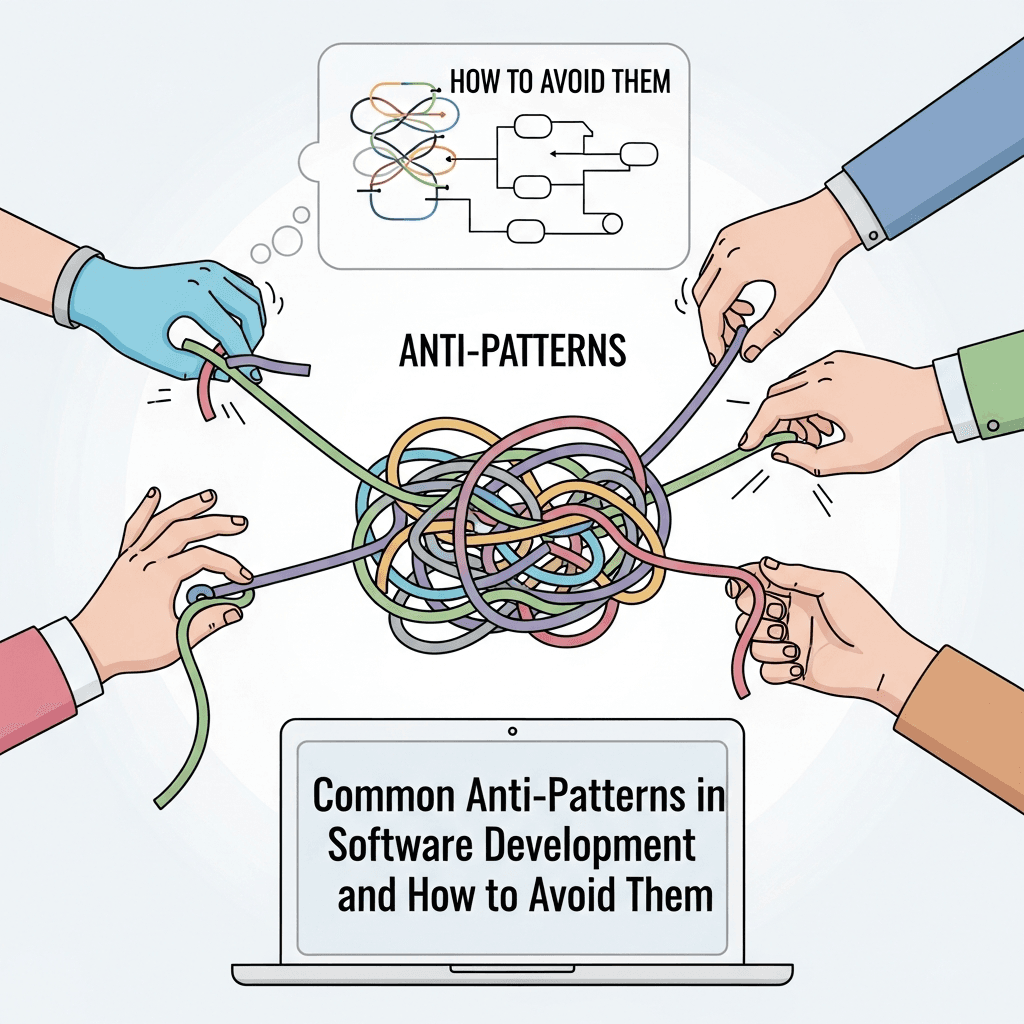
Common Anti-Patterns in Software Development and How to Avoid Them

Introduction
In the realm of software development, anti-patterns are recurring solutions that are counterproductive and lead to negative consequences. Recognizing and avoiding these anti-patterns is crucial for developing efficient, maintainable, and scalable code.
The God Object
A God Object is an anti-pattern where a single class or module takes on too many responsibilities. This leads to tightly coupled code and makes maintenance a nightmare.
How to Avoid
- Single Responsibility Principle: Ensure each class or module has one responsibility.
- Refactoring: Break down large classes into smaller, focused ones.
Spaghetti Code
Spaghetti Code refers to code with a complex and tangled control structure, making it difficult to understand and maintain.
How to Avoid
- Use Design Patterns: Apply patterns like MVC, Observer, etc., to structure code better.
- Code Reviews: Regularly review code to identify and refactor confusing sections.
Copy-Paste Programming
This occurs when developers duplicate code instead of creating reusable components, leading to code duplication and inconsistency.
How to Avoid
- DRY Principle (Don't Repeat Yourself): Abstract common logic into functions or classes.
- Code Reusability: Create utility libraries or modules for common tasks.
Premature Optimization
Optimizing code early in the development process can lead to unnecessary complexity and wasted resources.
How to Avoid
- YAGNI Principle (You Aren’t Gonna Need It): Focus on required features first before optimizing.
- Profiling Tools: Use profiling tools to identify performance bottlenecks.
Magic Numbers
Magic Numbers are hard-coded values with no explanation. They make code less readable and harder to maintain.
How to Avoid
- Use Constants: Define constants with descriptive names for magic numbers.
- Configuration Files: Externalize configuration values to make them easier to update.
Not Invented Here Syndrome
This anti-pattern involves rejecting external solutions in favor of building in-house solutions, which can lead to wasted resources.
How to Avoid
- Open Source Solutions: Evaluate and consider open-source libraries or frameworks.
- Community Best Practices: Leverage community knowledge and solutions.
Conclusion
By recognizing and addressing these common anti-patterns, software developers can significantly improve code quality, maintainability, and efficiency. Implementing principles like DRY, YAGNI, and Single Responsibility can lead to better software design and ultimately, more successful projects.
Written by
CodewithYohaFull-Stack Software Engineer with 7+ years of experience in Java, Spring Boot, and cloud architecture across AWS, Azure, and GCP. Writing production-grade engineering patterns for developers who ship real software.