
Introduction
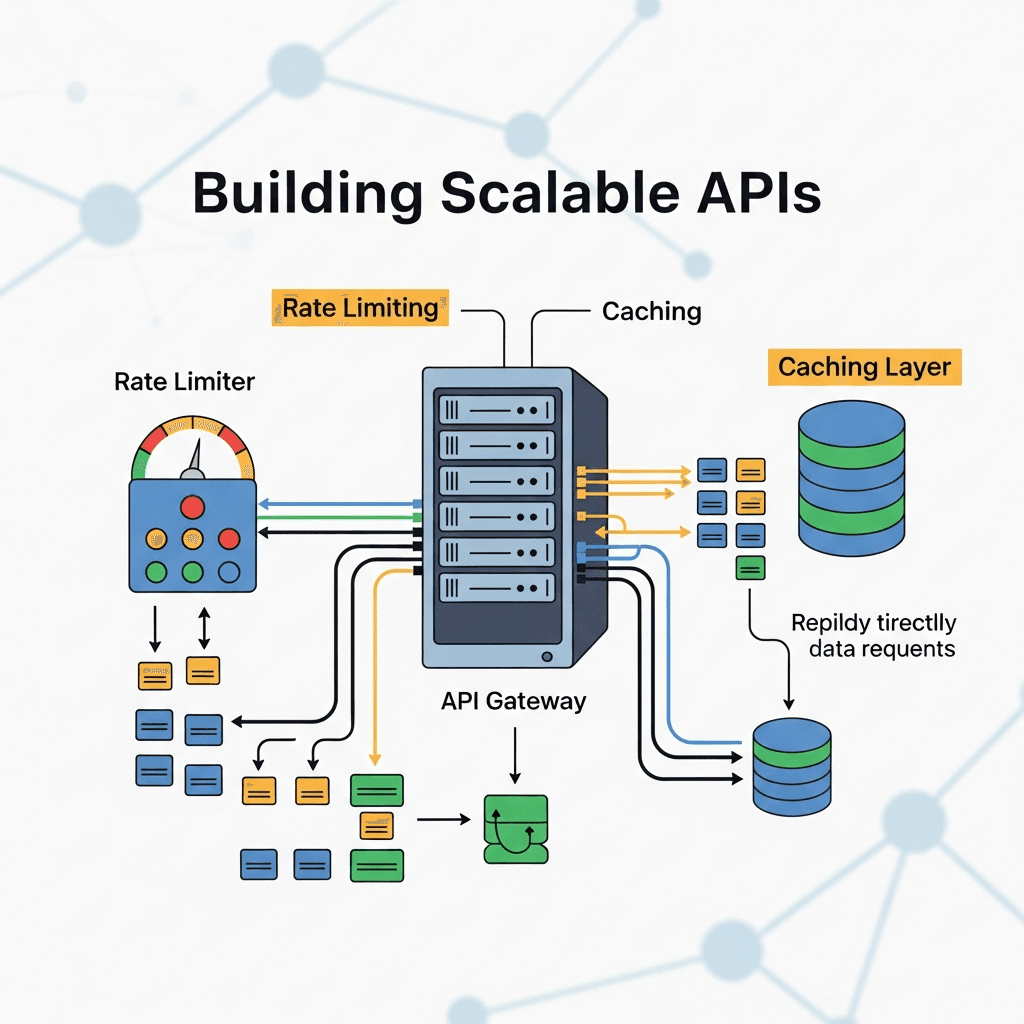
In today's digital age, APIs are the backbone of many applications, providing the necessary interfaces for communication between different software systems. As the demand on these APIs increases, ensuring they can handle high loads while maintaining performance and reliability becomes crucial. Two powerful techniques to achieve this are rate limiting and caching.
Understanding Rate Limiting
Rate limiting is a technique used to control the number of requests a client can make to an API in a given timeframe. This prevents abuse and ensures fair usage of resources. Implementing rate limiting can protect your API from being overwhelmed by too many requests.
Strategies for Rate Limiting
There are several strategies for implementing rate limiting:
- Fixed Window: Limits requests based on a fixed time window.
- Sliding Window: More flexible than fixed window as it allows requests within a sliding timeframe.
- Token Bucket: Allows for bursts of requests by utilizing tokens which refill over time.
- Leaky Bucket: Smoothens out bursts by queuing requests.
Example Code
from flask_limiter import Limiter
from flask import Flask

app = Flask(__name__)
limiter = Limiter(
    app,
    key_func=get_remote_address,
    default_limits=["200 per day", "50 per hour"]
)

@app.route("/api/resource")
@limiter.limit("5 per minute")
def resource():
    return {"message": "This is a rate-limited resource."}
The Role of Caching in API Performance
Caching is another critical strategy in building scalable APIs. By storing copies of frequently requested data, caching can significantly reduce the load on backend systems and decrease latency for end-users.
Types of Caching
- Client-Side Caching: Utilizes HTTP headers like
ETagandCache-Controlto inform clients to cache responses. - Server-Side Caching: Stores responses on the server to quickly serve repeated requests.
- Distributed Caching: Uses systems like Redis or Memcached to cache data across multiple servers.
Example Code
from flask_caching import Cache

app = Flask(__name__)
cache = Cache(app, config={'CACHE_TYPE': 'redis'})

@app.route("/api/data")
@cache.cached(timeout=60)
def get_data():
    # Expensive operation to fetch data
    return fetch_expensive_data()
Combining Rate Limiting and Caching
For optimal performance, you can combine rate limiting and caching. This ensures that not only are requests throttled but also frequently requested resources are served faster, enhancing user experience.
Monitoring and Adjusting
Implementing these techniques is not a one-time task. Continuous monitoring is essential to adjust the rate limits and cache settings based on usage patterns and system performance.
Conclusion
Building scalable APIs is essential for modern applications, and techniques like rate limiting and caching play a vital role in achieving this. By effectively implementing these strategies, you can ensure your API remains performant and reliable even under high demand. As your application grows, regularly revisiting and optimizing these strategies will help maintain scalability and performance.

Written by
CodewithYohaFull-Stack Software Engineer with 7+ years of experience in Java, Spring Boot, and cloud architecture across AWS, Azure, and GCP. Writing production-grade engineering patterns for developers who ship real software.