Understanding Clean Architecture in Modern Backend Applications

Introduction
Clean Architecture is a software design philosophy that emphasizes separation of concerns, aiming to create systems that are easy to maintain, test, and scale. It advocates for a structure where high-level policies are not dependent on low-level details, making it easier to adapt to changing requirements.
Core Principles of Clean Architecture
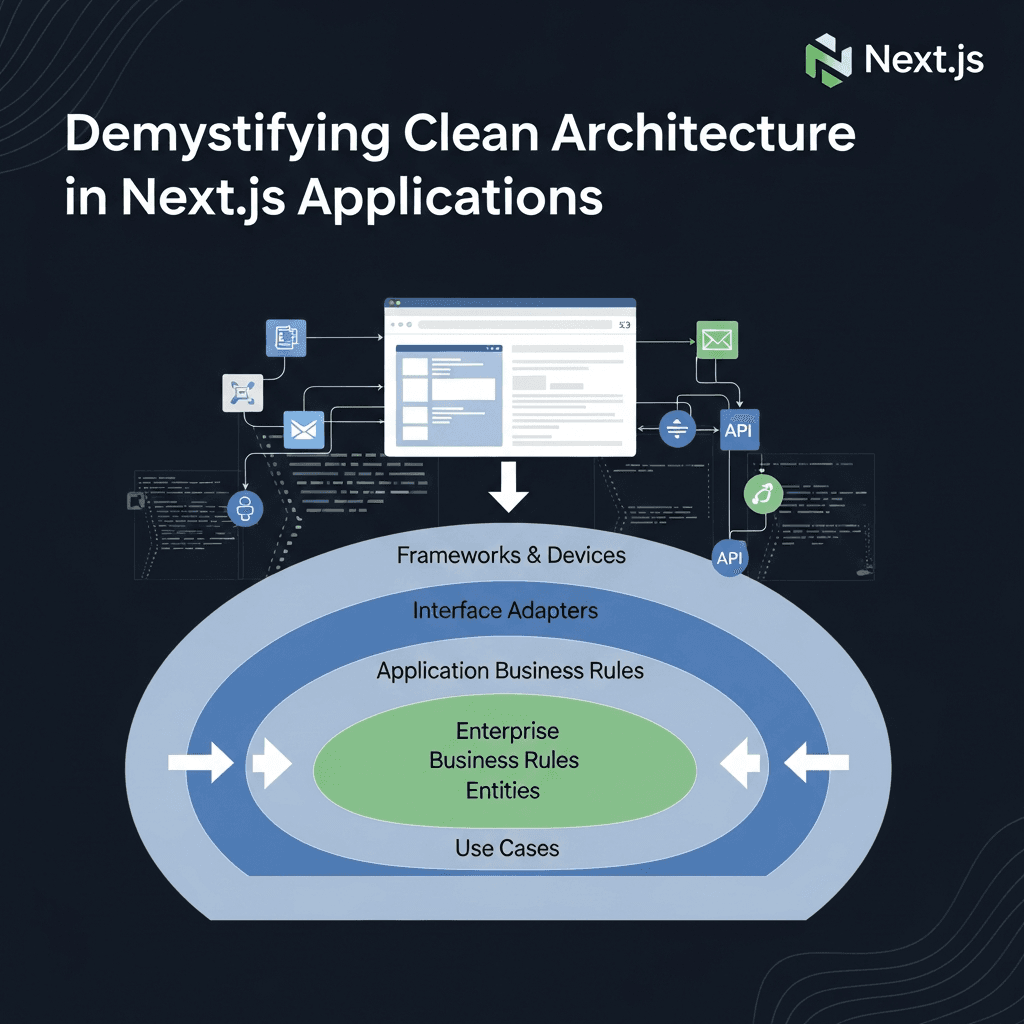
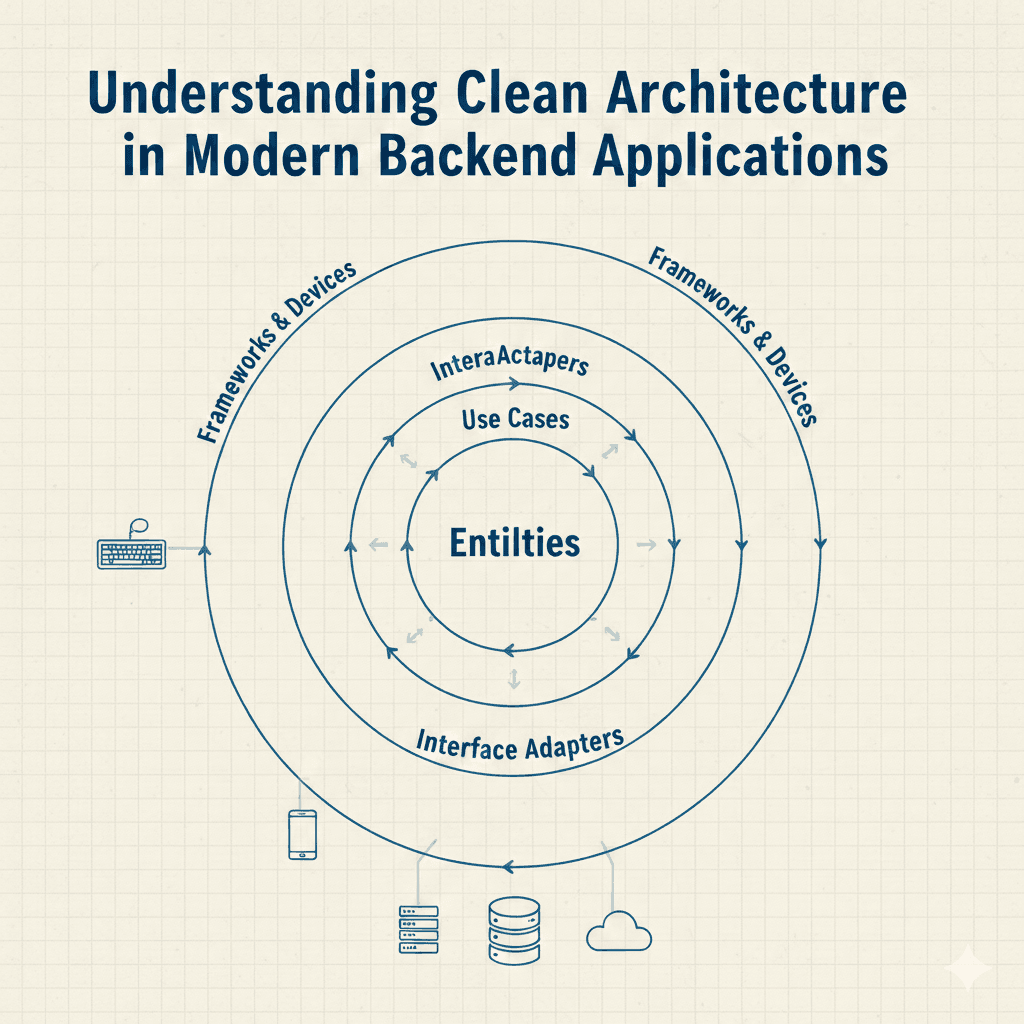
The cornerstone of Clean Architecture is the dependency rule, which dictates that source code dependencies can only point inward. This ensures that inner layers remain independent of outer layers, enhancing the flexibility and testability of the application.
Architectural Layers
1. Entities
Entities are the core business objects of the application. They encapsulate the core business logic and rules and are independent of any external frameworks or technologies. This layer is stable and should remain unaffected by changes in other parts of the system.
2. Use Cases
Use cases orchestrate the flow of data to and from the entities. They define application-specific business rules and are responsible for executing the business logic in response to user actions.
class CreateUserUseCase:
    def __init__(self, user_repository):
        self.user_repository = user_repository

    def execute(self, user_data):
        user = User(**user_data)
        self.user_repository.save(user)
3. Interface Adapters
This layer is responsible for converting data from the use cases and entities to a format that is suitable for the external world, like databases, web APIs, or the user interface. It acts as a mediator between the inner layers and the outer layers.
4. Frameworks and Drivers
The outermost layer comprises frameworks and tools such as web frameworks, databases, and other external services. It is where the implementation details reside, and it should depend on the inner layers through interfaces.
Dependency Inversion
Dependency inversion is a key component of Clean Architecture, aligning with the SOLID principles. It insists that both high-level modules and low-level modules should depend on abstractions, not on concrete implementations.
Benefits of Clean Architecture
- Testability: As business rules are separated from external dependencies, unit testing becomes easier and more effective.
- Maintainability: With clear separation of concerns, making changes in one part of the system is less likely to affect others.
- Scalability: The architecture supports gradual scaling by allowing developers to add new features without disrupting existing ones.
Implementing Clean Architecture
To implement Clean Architecture, start by defining the core business entities and use cases. Then, create interfaces that represent dependencies on external systems and implement these interfaces in the outer layers. This approach ensures that changes to external components do not affect the core business logic.
Conclusion
Clean Architecture provides a robust framework for building maintainable, scalable, and testable backend applications. By adhering to its principles, developers can create systems that are adaptable to change and resilient to evolving requirements. Embracing Clean Architecture is a step towards building sustainable software systems that stand the test of time.
Written by
CodewithYohaFull-Stack Software Engineer with 7+ years of experience in Java, Spring Boot, and cloud architecture across AWS, Azure, and GCP. Writing production-grade engineering patterns for developers who ship real software.