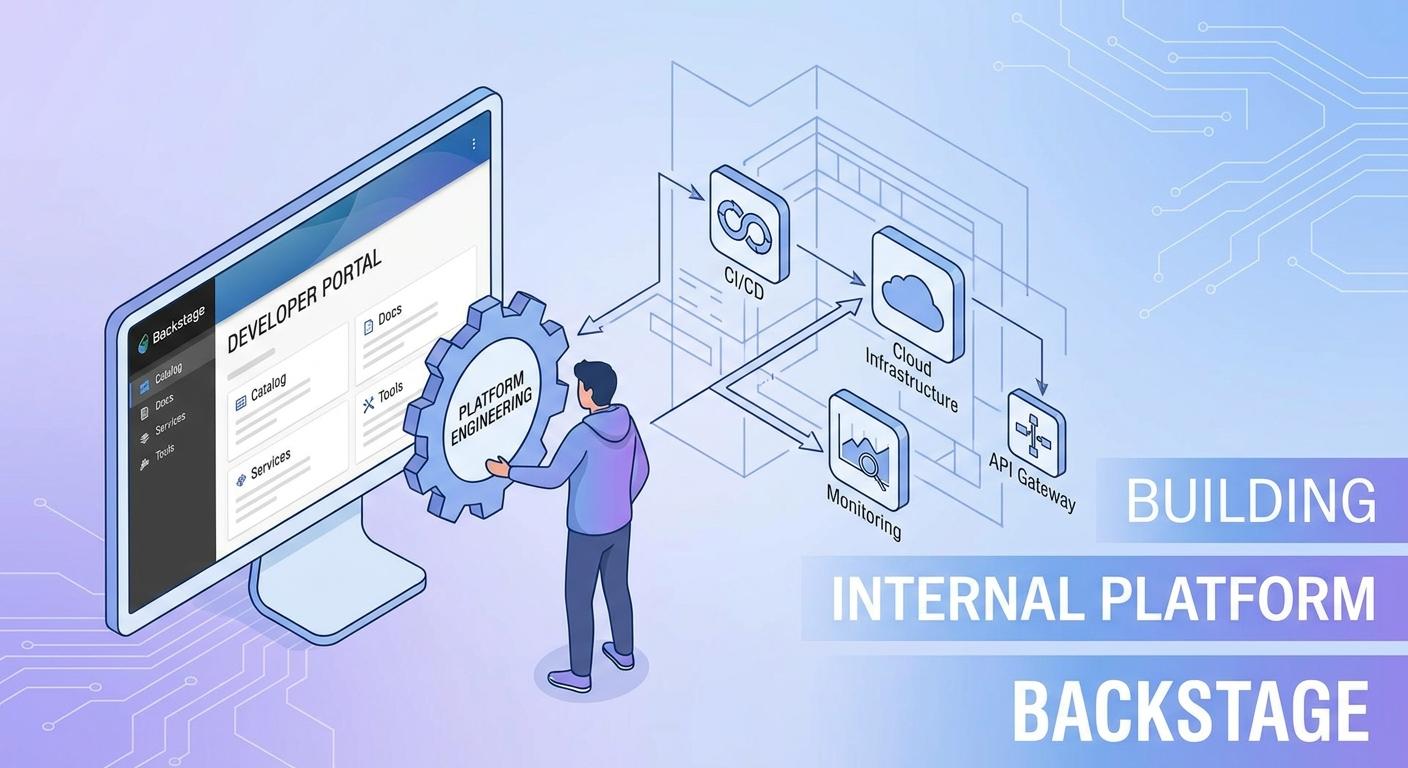
Platform Engineering: Building Scalable Internal Developer Platforms


Introduction: The Evolution Towards Platform Engineering
In the relentless pursuit of speed, reliability, and innovation, organizations have continuously evolved their software delivery practices. From traditional waterfall to Agile, and then the transformative power of DevOps, each shift aimed at breaking down silos and accelerating value delivery. However, as organizations scale, the inherent complexities of managing diverse technologies, cloud infrastructure, and compliance requirements can overwhelm development teams, ironically slowing them down.
Enter Platform Engineering, a discipline emerging to address these challenges head-on. It's about empowering developers by providing them with a curated, opinionated, and self-service Internal Developer Platform (IDP). An IDP abstracts away underlying infrastructure complexities, offering a paved road for developers to build, deploy, and operate applications efficiently and securely. This comprehensive guide will delve into the core principles of Platform Engineering, the architecture of scalable IDPs, and practical strategies to implement them successfully.
Prerequisites
To fully grasp the concepts discussed in this article, a basic understanding of the following is recommended:
- DevOps Principles: Familiarity with CI/CD, automation, and collaboration.
- Cloud Computing: Understanding of IaaS, PaaS, and common cloud services (e.g., Kubernetes, serverless).
- Infrastructure as Code (IaC): Knowledge of tools like Terraform or Pulumi.
- Microservices Architecture: Awareness of distributed systems concepts.
1. What is Platform Engineering?
Platform Engineering is the discipline of designing and building toolchains and workflows that enable self-service capabilities for software engineering organizations. Its primary goal is to enhance developer experience and productivity by providing a robust, reliable, and standardized platform that streamlines the entire software development lifecycle.
Unlike traditional DevOps, which often emphasizes shared responsibility and manual tooling integration, Platform Engineering centralizes the creation and maintenance of a 'product' – the internal developer platform itself. This platform team treats developers as their customers, focusing on their needs to reduce cognitive load and accelerate feature delivery.
Key characteristics:
- Product Thinking: The platform is treated as a product with its own roadmap, users (developers), and KPIs.
- Developer Experience (DX) Focus: Prioritizes ease of use, self-service, and minimal friction for developers.
- Abstraction: Hides underlying infrastructure complexity, exposing only necessary controls.
- Standardization: Promotes consistent practices, tools, and environments across teams.
- Automation: Automates repetitive tasks, from provisioning to deployment and monitoring.
2. The Rise of Internal Developer Platforms (IDPs)
An Internal Developer Platform (IDP) is the tangible output of Platform Engineering. It's an integrated set of tools and services that developers interact with to manage their applications from conception to production. The rise of IDPs is a direct response to the increasing complexity of modern software development, characterized by:
- Cloud-Native Adoption: Kubernetes, microservices, serverless, and distributed systems introduce significant operational overhead.
- DevOps Bottlenecks: While DevOps promotes shared responsibility, it can lead to developers spending excessive time on infrastructure concerns rather than core business logic.
- Tool Sprawl: A fragmented ecosystem of CI/CD, monitoring, logging, security, and cloud tools requires constant integration and maintenance.
- Compliance and Governance: Ensuring security, regulatory compliance, and consistent practices across hundreds or thousands of services becomes a monumental task.
IDPs aim to solve these by providing a single pane of glass, offering a golden path for developers, and embedding best practices and guardrails by default.
3. Core Pillars of a Scalable IDP
Building a scalable IDP requires focus on several foundational pillars:
a. Self-Service Capabilities
Developers should be able to provision resources, deploy applications, and manage configurations without needing to open tickets or wait for a platform team. This empowers them and reduces bottlenecks.
b. Automation Everywhere
From infrastructure provisioning to code deployment, testing, and even incident response, automation is key to consistency, speed, and reliability.
c. Standardization and Opinionation
An IDP provides 'golden paths' – predefined templates, configurations, and workflows that embed best practices, security policies, and architectural patterns. This reduces decision fatigue for developers.
d. Observability and Feedback Loops
Integrated monitoring, logging, and tracing tools provide developers with immediate insights into their applications' health and performance, enabling quick diagnosis and resolution.
e. Security and Compliance by Design
Security policies, access controls, and compliance checks are built into the platform's workflows and tooling, making it easier for developers to adhere to organizational standards without extensive manual effort.
4. Key Components of a Scalable IDP Architecture
A typical IDP architecture involves several interconnected components, working together to provide a seamless developer experience:
- Developer Portal/Control Plane: The primary interface for developers (e.g., Backstage, internal UIs). It offers a service catalog, self-service provisioning, and visibility into application health.
- Service Catalog: A centralized registry of all services, components, and environments, often integrated with version control systems.
- CI/CD Pipeline: Automated workflows for building, testing, and deploying applications (e.g., GitLab CI, GitHub Actions, Jenkins, Argo CD).
- Infrastructure as Code (IaC) Engine: Manages the provisioning and configuration of underlying infrastructure (e.g., Terraform, Crossplane, Pulumi).
- Orchestration Layer: Typically Kubernetes, providing a robust and scalable environment for running containerized applications.
- Observability Stack: Tools for monitoring, logging, tracing, and alerting (e.g., Prometheus, Grafana, Loki, Jaeger, ELK Stack).
- Secrets Management: Securely stores and manages sensitive information (e.g., HashiCorp Vault, AWS Secrets Manager, Kubernetes Secrets).
- Policy Engine: Enforces security, compliance, and governance policies (e.g., OPA Gatekeeper, Kyverno).
- Artifact Repository: Stores build artifacts, container images, and packages (e.g., Docker Hub, JFrog Artifactory, Nexus).
5. Designing for Self-Service and Developer Experience
The developer portal is the front door to your IDP. It must be intuitive, comprehensive, and truly self-service. Tools like Backstage (an open-source project from Spotify) have emerged as popular choices for building such portals.
Key principles for DX:
- Intuitive UI: Simple, clean interfaces for common tasks.
- Templates and Blueprints: Pre-configured starting points for new services, environments, or components.
- Documentation: Integrated, up-to-date documentation for all platform features and best practices.
- Feedback Mechanisms: Easy ways for developers to report issues, suggest improvements, and get support.
- Abstraction: Shield developers from underlying infrastructure complexity.
Code Example: Backstage Template Definition
Here's a simplified example of a template.yaml for a new microservice in Backstage, allowing developers to scaffold a new service with predefined settings:
apiVersion: scaffolder.backstage.io/v1beta3
kind: Template
metadata:
  name: spring-boot-microservice
  title: Spring Boot Microservice
  description: Creates a new Spring Boot microservice with basic structure and CI/CD.
  tags:
    - java
    - spring-boot
    - microservice
    - backend
spec:
  owner: platform-team
  type: service
  parameters:
    - title: Provide some simple information
      required:
        - component_id
        - description
      properties:
        component_id:
          title: Component Name
          type: string
          description: Unique name for the component (e.g., order-service).
          ui:autofocus: true
          ui:options:
            rows: 1
        description:
          title: Description
          type: string
          description: A short description of the component.
        owner:
          title: Owner
          type: string
          description: Owner of the component (e.g., my-team).
          default: user:guest
          ui:field: OwnerPicker
    - title: Choose a repository location
      required:
        - repoUrl
      properties:
        repoUrl:
          title: Repository Location
          type: string
          ui:field: RepoUrlPicker
          ui:options:
            allowedHosts:
              - github.com
  steps:
    - id: fetch-base
      name: Fetch Base Template
      action: fetch:template
      input:
        url: ./skeleton
        targetPath: ./

    - id: publish
      name: Publish to GitHub
      action: publish:github
      input:
        allowedHosts:
          - github.com
        repoUrl: ${{ parameters.repoUrl }}

    - id: register
      name: Register Component
      action: catalog:register
      input:
        repoContentsUrl: ${{ steps['publish'].output.repoContentsUrl }}
        catalogInfoPath: '/catalog-info.yaml'

  output:
    links:
      - text: Repository
        url: ${{ steps['publish'].output.remoteUrl }}
      - text: Open in catalog
        icon: catalog
        url: ${{ steps['register'].output.entityRef | backstage.url }}
6. Automation and Orchestration with CI/CD
CI/CD pipelines are the backbone of any IDP, automating the journey of code from commit to production. A scalable IDP integrates CI/CD seamlessly, often leveraging GitOps principles where Git repositories serve as the single source of truth for declarative infrastructure and application configurations.
Key considerations for CI/CD:
- Standardized Pipelines: Provide reusable pipeline templates for different application types.
- Fast Feedback: Optimize pipelines for quick execution and immediate feedback to developers.
- Security Scanning: Integrate static analysis (SAST), dynamic analysis (DAST), and dependency scanning.
- Environment Promotion: Automate deployments across development, staging, and production environments.
- Rollback Capabilities: Ensure quick and safe rollbacks in case of issues.
Code Example: Simplified GitHub Actions Workflow
This workflow demonstrates a typical CI/CD process for a containerized application, triggered by a push to the main branch:
name: Deploy to Kubernetes

on: push
  branches:
    - main

env:
  IMAGE_NAME: my-app
  K8S_NAMESPACE: production

jobs:
  build-and-deploy:
    runs-on: ubuntu-latest
    steps:
      - name: Checkout code
        uses: actions/checkout@v3

      - name: Set up Docker BuildX
        uses: docker/setup-buildx-action@v2

      - name: Log in to Container Registry
        uses: docker/login-action@v2
        with:
          username: ${{ secrets.DOCKER_USERNAME }}
          password: ${{ secrets.DOCKER_PASSWORD }}

      - name: Build and push Docker image
        uses: docker/build-push-action@v4
        with:
          context: .
          push: true
          tags: my-registry/${{ env.IMAGE_NAME }}:${{ github.sha }}
          cache-from: type=gha
          cache-to: type=gha,mode=max

      - name: Install kubectl
        uses: azure/setup-kubectl@v3
        with:
          version: 'latest'

      - name: Configure Kubeconfig
        run: |
          echo "${{ secrets.KUBECONFIG_BASE64 }}" | base64 -d > $HOME/.kube/config
          chmod 600 $HOME/.kube/config

      - name: Deploy to Kubernetes
        run: |
          kubectl apply -f k8s/deployment.yaml -n ${{ env.K8S_NAMESPACE }}
          kubectl set image deployment/${{ env.IMAGE_NAME }} ${{ env.IMAGE_NAME }}=my-registry/${{ env.IMAGE_NAME }}:${{ github.sha }} -n ${{ env.K8S_NAMESPACE }}

      - name: Verify Deployment
        run: kubectl rollout status deployment/${{ env.IMAGE_NAME }} -n ${{ env.K8S_NAMESPACE }}
7. Infrastructure as Code (IaC) and GitOps
IaC is fundamental to building scalable and repeatable infrastructure. Tools like Terraform, Pulumi, and Crossplane allow platform teams to define infrastructure declaratively, version it, and manage it like application code. GitOps extends this by using Git as the single source of truth for both application and infrastructure configurations, with automated reconciliation loops.
Benefits of IaC and GitOps in an IDP:
- Consistency: Ensures environments are identical across stages.
- Version Control: Tracks all infrastructure changes, enabling easy rollbacks and auditing.
- Collaboration: Facilitates teamwork on infrastructure definitions.
- Automation: Reduces manual errors and speeds up provisioning.
- Self-Healing: GitOps operators can automatically detect and correct configuration drift.
Code Example: Basic Terraform Module for a Kubernetes Deployment
This Terraform module could be used by a developer via the IDP to provision a Kubernetes deployment and service, abstracting the raw YAML.
# main.tf - Defines the Kubernetes Deployment and Service

resource "kubernetes_deployment" "app_deployment" {
  metadata {
    name      = var.app_name
    namespace = var.namespace
    labels = {
      app = var.app_name
    }
  }

  spec {
    replicas = var.replica_count
    selector {
      match_labels = {
        app = var.app_name
      }
    }
    template {
      metadata {
        labels = {
          app = var.app_name
        }
      }
      spec {
        container {
          name  = var.app_name
          image = "${var.image_repo}/${var.image_name}:${var.image_tag}"
          port {
            container_port = var.container_port
          }
          env {
            name  = "ENVIRONMENT"
            value = var.environment
          }
          # ... other container settings like resources, probes
        }
        # ... other pod settings
      }
    }
  }
}

resource "kubernetes_service" "app_service" {
  metadata {
    name      = "${var.app_name}-service"
    namespace = var.namespace
    labels = {
      app = var.app_name
    }
  }

  spec {
    selector = {
      app = var.app_name
    }
    port {
      port        = var.service_port
      target_port = var.container_port
    }
    type = "ClusterIP" # Or LoadBalancer, NodePort based on var.service_type
  }
}

# variables.tf - Input variables for the module

variable "app_name" {
  description = "The name of the application."
  type        = string
}

variable "namespace" {
  description = "The Kubernetes namespace for the application."
  type        = string
  default     = "default"
}

variable "replica_count" {
  description = "Number of desired replicas."
  type        = number
  default     = 2
}

variable "image_repo" {
  description = "Docker image repository."
  type        = string
}

variable "image_name" {
  description = "Docker image name."
  type        = string
}

variable "image_tag" {
  description = "Docker image tag."
  type        = string
}

variable "container_port" {
  description = "The port the application listens on inside the container."
  type        = number
}

variable "service_port" {
  description = "The port the Kubernetes service will expose."
  type        = number
  default     = 80
}

variable "environment" {
  description = "The deployment environment (e.g., dev, staging, prod)."
  type        = string
}
8. Observability and Feedback Loops
An IDP must provide robust observability features to empower developers to understand, debug, and optimize their applications. This includes integrated logging, metrics, tracing, and alerting, all accessible through the developer portal or linked dashboards.
Components of an Observability Stack:
- Metrics: Prometheus, Grafana for visualization.
- Logging: Loki, ELK Stack (Elasticsearch, Logstash, Kibana), Splunk.
- Tracing: Jaeger, Zipkin, OpenTelemetry.
- Alerting: Alertmanager, PagerDuty, Opsgenie.
By providing a unified view of application health and performance, developers can quickly identify issues, understand their root causes, and iterate on improvements, closing the feedback loop effectively.
9. Security and Compliance in IDPs
Security and compliance cannot be an afterthought; they must be baked into the IDP from the ground up. The platform team is responsible for embedding security best practices and guardrails, making it easier for developers to build secure and compliant applications by default.
Strategies for security and compliance:
- Policy as Code: Use tools like Open Policy Agent (OPA) or Kyverno to enforce policies across Kubernetes, CI/CD, and IaC.
- Secrets Management: Integrate secure solutions (e.g., HashiCorp Vault, cloud secret managers) into deployment pipelines.
- Role-Based Access Control (RBAC): Implement granular access controls to platform resources and application environments.
- Automated Security Scanning: Incorporate SAST, DAST, and software composition analysis (SCA) into CI/CD pipelines.
- Immutable Infrastructure: Deploying new instances rather than modifying existing ones helps prevent configuration drift and reduces attack surface.
- Audit Trails: Log all significant actions and changes for auditing and compliance reporting.
10. Adopting Platform Engineering: A Phased Approach
Implementing an IDP is a significant undertaking. A phased, iterative approach is crucial for success:
- Start Small, Identify Pain Points: Begin by addressing the most pressing developer pain points. Focus on a single team or a specific application type initially.
- Define Your "Golden Path": Choose an opinionated stack and workflow for common use cases (e.g., a standard microservice template).
- Build a Minimum Viable Platform (MVP): Focus on core functionalities like self-service provisioning for a specific resource or automated deployments for one application type.
- Iterate and Gather Feedback: Treat the IDP as a product. Continuously gather feedback from developers, measure adoption, and prioritize improvements based on their needs.
- Evangelize and Document: Promote the IDP internally. Provide clear, comprehensive documentation and training.
- Expand Scope: Gradually add more services, templates, and features based on proven success and demand.
11. Measuring Success and ROI of Your IDP
To justify the investment in Platform Engineering, it's essential to measure the impact and return on investment (ROI). Key metrics often align with DORA (DevOps Research and Assessment) metrics and developer satisfaction:
- Lead Time for Changes: Time from code commit to production deployment.
- Deployment Frequency: How often code is deployed to production.
- Change Failure Rate: Percentage of deployments causing a degradation of service.
- Mean Time To Restore (MTTR): Time taken to recover from a service incident.
- Developer Satisfaction: Measured through surveys, qualitative feedback, and reduced context switching.
- Reduced Operational Overhead: Time saved by development teams on infrastructure tasks.
- Cost Savings: Optimization of cloud resources, reduced manual effort.
- Compliance Adherence: Automated checks and reduced audit findings.
12. Real-World Use Cases and Success Stories
Many leading companies have successfully adopted Platform Engineering, often driven by the need to scale their development efforts and maintain agility:
- Spotify (Backstage): Open-sourced their IDP, showcasing how a centralized portal can manage hundreds of microservices and thousands of developers.
- Netflix: Known for its sophisticated internal tools that enable engineers to rapidly deploy and operate services on a massive scale, abstracting AWS complexities.
- Salesforce: Leverages a robust internal platform to manage its vast ecosystem of applications and services, focusing on developer productivity and compliance.
- Internal Cloud Platforms: Many enterprises build their own "internal clouds" using Kubernetes, IaC, and custom portals to provide a consistent, self-service experience across different business units.
These examples highlight a common theme: providing a well-designed, opinionated platform significantly reduces cognitive load for developers, allowing them to focus on delivering business value.
Best Practices for Building Scalable IDPs
- Treat the Platform as a Product: Have a dedicated platform team, a product manager, a roadmap, and treat developers as your customers.
- Start Simple and Iterate: Don't try to build everything at once. Identify critical pain points and deliver an MVP, then expand incrementally.
- Involve Developers Early and Often: Get feedback throughout the development process. The platform must solve their problems.
- Automate Everything Possible: Manual steps are prone to error and slow down delivery.
- Prioritize Documentation: Clear, accessible, and up-to-date documentation is crucial for adoption and self-service.
- Embrace Open Source: Leverage battle-tested open-source tools where possible (e.g., Kubernetes, Backstage, Terraform).
- Focus on Abstraction, Not Just Aggregation: Simply bundling tools together isn't enough; the platform must abstract away complexity.
- Measure Everything: Track DORA metrics, developer satisfaction, and platform usage to demonstrate value and guide improvements.
Common Pitfalls to Avoid
- Over-Engineering and Feature Bloat: Building a platform that's too complex or tries to do too much, leading to low adoption.
- Ignoring Developer Feedback: Building a platform in isolation without understanding the real needs and pain points of your users.
- "Build It and They Will Come" Mentality: Lack of internal marketing, documentation, and support will lead to low adoption, even with a great platform.
- Reinventing the Wheel: Building custom solutions for problems that can be solved with existing open-source or commercial tools.
- Lack of Clear Ownership: Without a dedicated platform team and clear responsibilities, the IDP can become an unmaintained collection of tools.
- Treating the Platform as a Project, Not a Product: A platform requires continuous investment, evolution, and support.
- Forgetting Operational Aspects: A platform needs to be stable, secure, and observable itself. Don't neglect the operations of the platform team.
Conclusion: Paving the Golden Path to Productivity
Platform Engineering is not just a buzzword; it's a strategic imperative for organizations aiming to thrive in the complex landscape of modern software development. By thoughtfully designing and building scalable Internal Developer Platforms, organizations can significantly reduce cognitive load for developers, accelerate feature delivery, improve reliability, and enhance security and compliance.
An effective IDP fosters a culture of innovation by empowering developers to focus on what they do best: writing code that delivers business value. It's a continuous journey of iteration, feedback, and improvement, but the rewards – happier developers, faster delivery, and a more resilient organization – are well worth the investment. Embrace Platform Engineering, and pave the golden path to unparalleled developer productivity and operational excellence.
Written by
CodewithYohaFull-Stack Software Engineer with 7+ years of experience in Java, Spring Boot, and cloud architecture across AWS, Azure, and GCP. Writing production-grade engineering patterns for developers who ship real software.