Event-Driven Architecture Explained: When and Why to Use It

Introduction
Event-driven architecture (EDA) is a design paradigm that is gaining popularity in building scalable and responsive systems. It revolves around the communication of events across different parts of a system, allowing for real-time data processing and system decoupling.
What is Event-Driven Architecture?
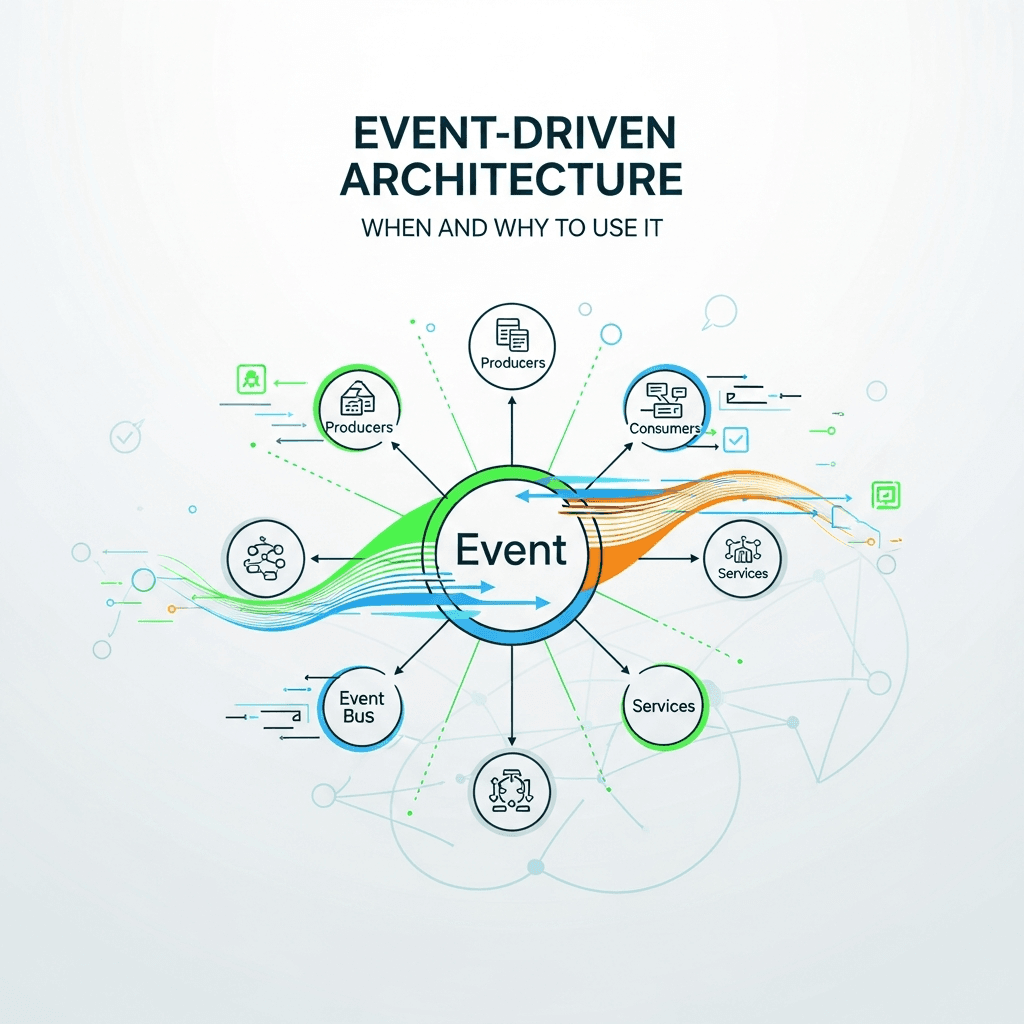
At its core, event-driven architecture involves the use of events as the primary means of interaction between different components. An event is a significant change in the state of a system, like a customer placing an order or a sensor reading a temperature change. These events are then propagated to different parts of the system that can act upon them.
Components of Event-Driven Architecture
Event Producers
These are the components that generate events. For example, a user action in a web application or data retrieved from an IoT sensor can act as event producers.
Event Consumers
These components listen for events and perform actions in response. For instance, an order processing service might listen for new order events and start the fulfillment process.
Event Channels
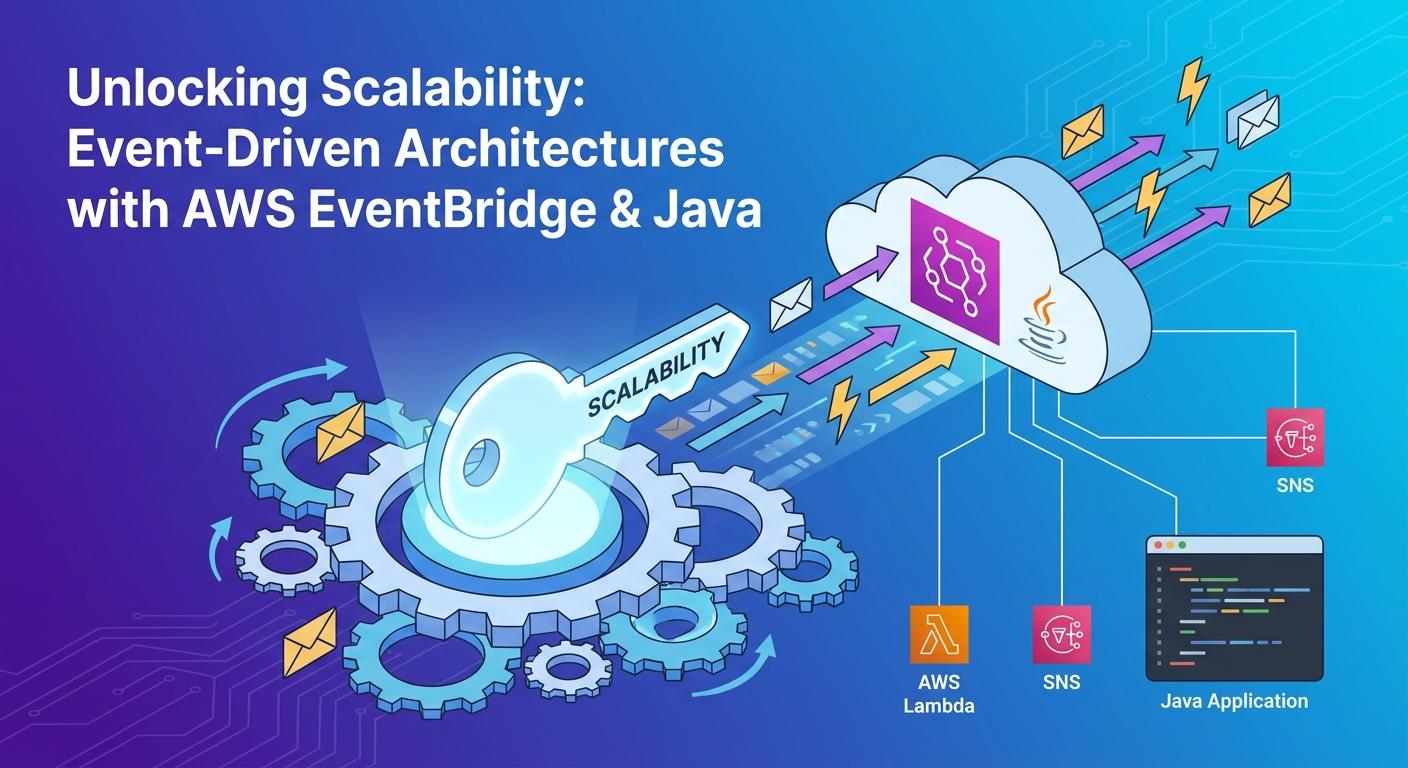
These are the mediums through which events are transmitted. Technologies like Apache Kafka, RabbitMQ, or AWS SNS/SQS are commonly used to facilitate this communication.
Benefits of Using Event-Driven Architecture
Scalability
EDA allows systems to scale more effectively. By decoupling components, each can be scaled independently to handle varying loads without affecting others.
Real-time Processing
Systems can process data in real-time as soon as events are generated, which is crucial for applications like online analytics or fraud detection.
Flexibility and Decoupling
Components in an event-driven system are loosely coupled, enabling easier maintenance and the ability to replace or upgrade parts without disrupting the whole system.
When to Use Event-Driven Architecture
EDA is particularly beneficial in scenarios where:
- Systems require real-time processing capabilities.
- There is a need to scale components independently.
- Applications are distributed across multiple services or locations.
Implementing Event-Driven Architecture
Example with Kafka
Let's consider an example where an e-commerce application uses Kafka for its event-driven architecture.
// Producer code for sending events
topic.send(new ProducerRecord<String, String>("order-events", "order123", "OrderPlaced"));
Handling Events
// Consumer code for handling events
@KafkaListener(topics = "order-events", groupId = "order-group")
public void listenGroupOrder(String message) {
    System.out.println("Received Message: " + message);
}
Conclusion
Event-driven architecture offers a robust framework for building modern applications that require high levels of scalability, flexibility, and responsiveness. By understanding when and why to use EDA, developers can design systems that are both efficient and resilient.
Written by
CodewithYohaFull-Stack Software Engineer with 7+ years of experience in Java, Spring Boot, and cloud architecture across AWS, Azure, and GCP. Writing production-grade engineering patterns for developers who ship real software.